The Atelier Perspective: Why Exceptional Design Begins With Better Materials
Exceptional interiors are rarely defined by a single dramatic feature. More often, their quality comes from the materials themselves and how thoughtfully those materials are brought together.
At Atelier Design Society, cabinetry is viewed as part of a larger material composition. Wood species, painted finishes, stone, hardware, flooring, and surrounding architectural surfaces influence one another. Better materials give designers more to work with: natural variation, texture, depth, precise finishes, and details that become more interesting at full scale.
But material quality alone is not enough. The real value comes from selecting the right material for the right application and understanding how it will interact with everything around it.
What Does “Better Materials” Actually Mean?
Better does not simply mean more expensive. A premium material should offer something meaningful to the project, whether that is natural character, construction quality, finish depth, performance, customization, or the ability to support a particular architectural idea.
For cabinetry, that can mean carefully selected wood, sophisticated painted finishes, precise construction, and interiors that feel as considered as the exterior. For stone, it may mean distinctive mineral movement, texture, or a finish that complements the cabinetry.
The question is not, “What is the most luxurious option?” It is, “Which material best supports this design?”
Why Should Cabinetry and Materials Be Considered Together?
Cabinetry occupies a significant amount of visual space. Its grain, color, door style, and finish immediately influence the materials around it.
A strongly figured walnut cabinet may benefit from quieter stone. Restrained painted cabinetry may allow a more expressive slab to become the focal point. Rift-cut white oak can create a controlled architectural rhythm that changes how flooring, hardware, and stone should be selected.
When cabinetry and surrounding materials are considered together, the palette becomes more cohesive and fewer decisions need to be corrected later.
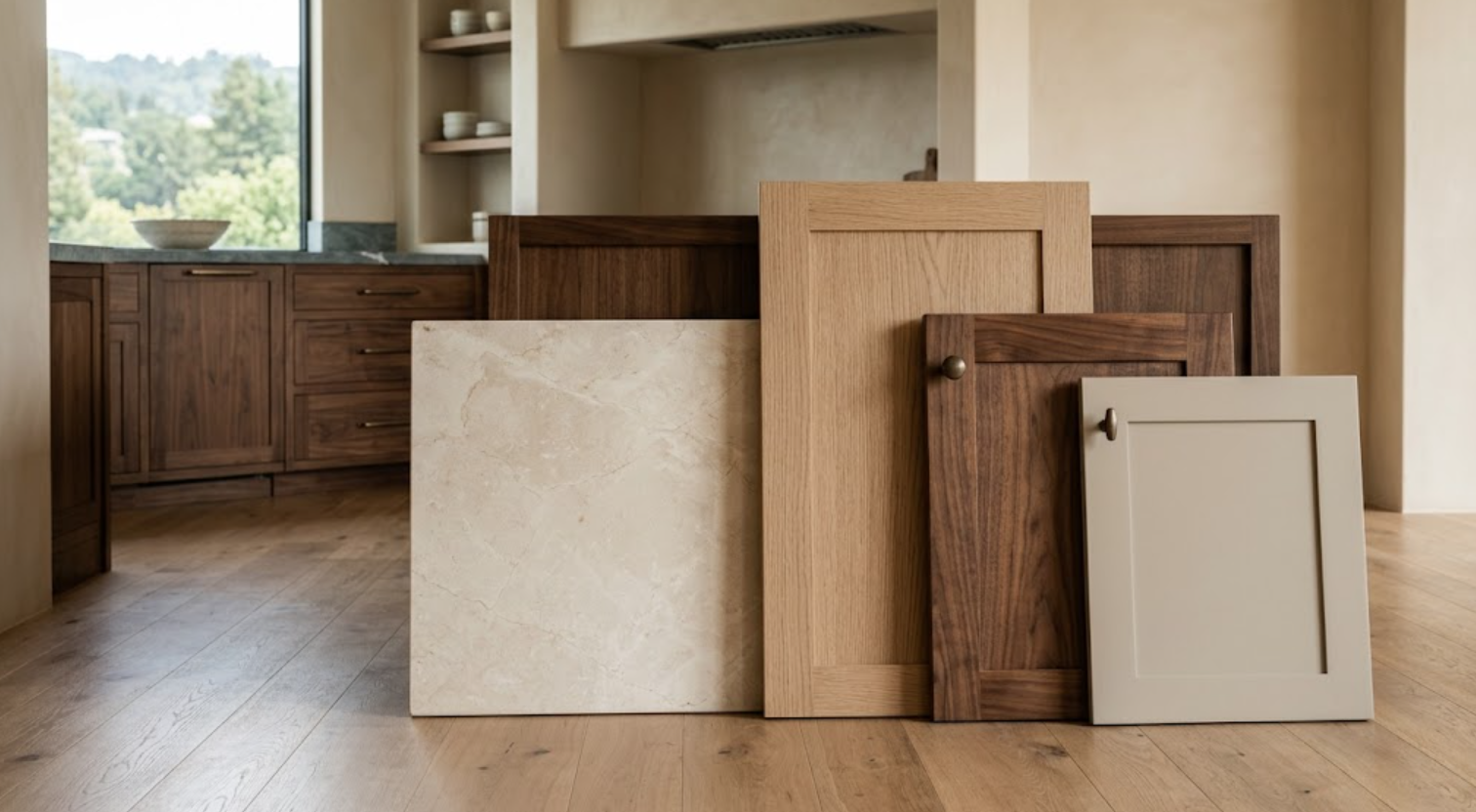
Why Does Natural Wood Have So Much Impact?
Natural wood offers something manufactured color alone cannot reproduce: variation.
White oak and walnut change subtly across grain, cut, finish, and lighting. Those differences give cabinetry depth even when the overall design is extremely restrained.
Rift-cut white oak can create long, controlled grain lines that reinforce clean architecture. Walnut introduces richer color and more pronounced variation. Neither requires excessive decorative detailing to feel substantial when the material itself has enough character.
This is one reason material selection should happen with physical samples whenever possible. The exact wood and finish matter more than the general species name.
How Does Stone Change the Character of Cabinetry?
Stone can support cabinetry or deliberately contrast with it.
Creamy, quieter surfaces can allow natural wood to remain dominant. More expressive natural stone can introduce movement against simple painted cabinetry. Darker stone can ground pale wood and create stronger architectural definition.
Scale also matters. A small stone sample cannot communicate how a large vein will move across an island or full-height backsplash. When natural stone is central to the design, full-slab viewing and intentional placement become part of the specification process.
Why Is Texture Important?
Material quality becomes especially noticeable through texture. Honed stone absorbs light differently from polished stone. Natural wood grain creates subtle movement. Plaster adds variation across larger surfaces. Metal introduces controlled reflection.
These differences allow a restrained palette to feel layered without adding more colors or decorative patterns.
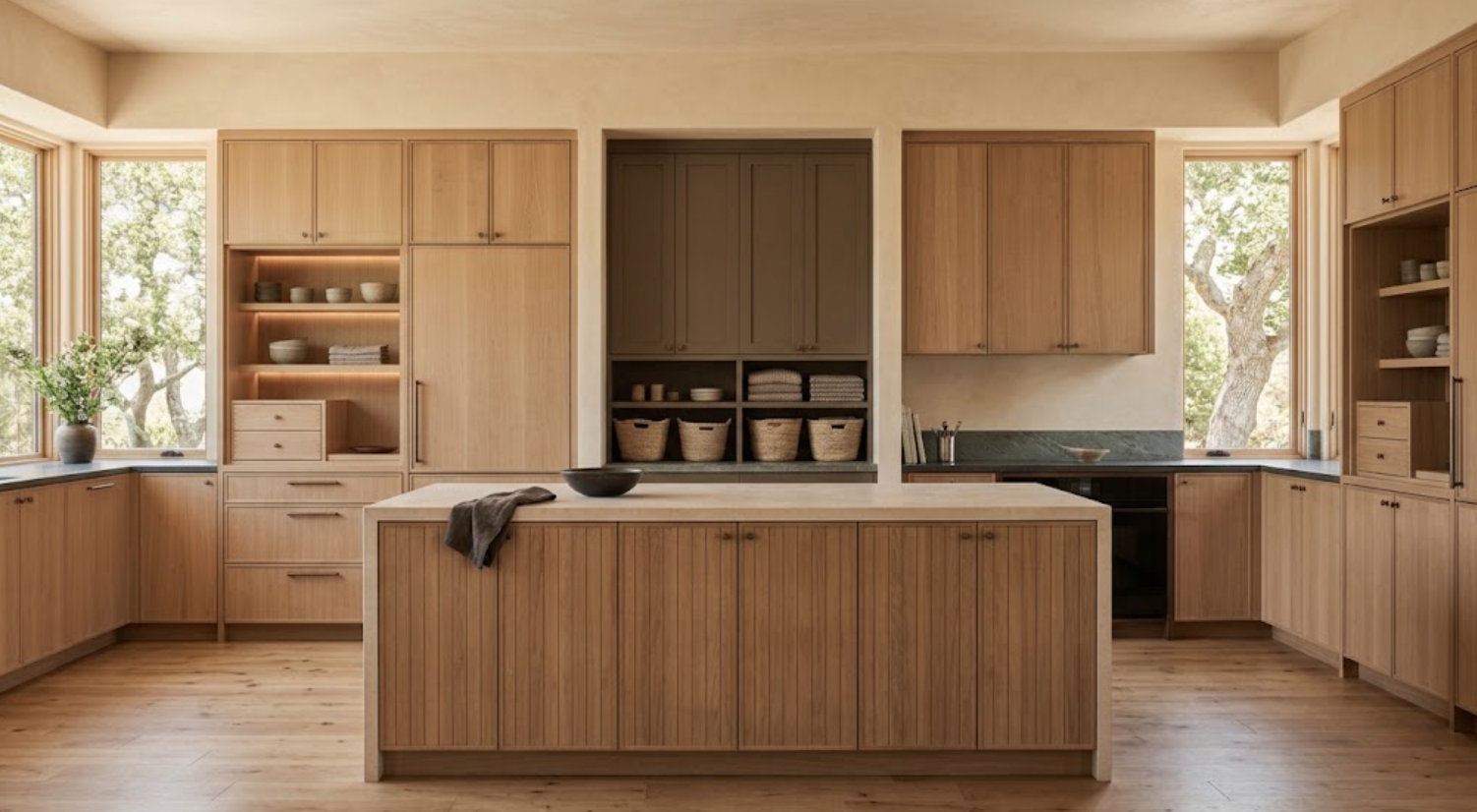
A kitchen composed primarily of white oak, creamy stone, plaster, and bronze can still feel visually rich because each material responds differently to light and touch.
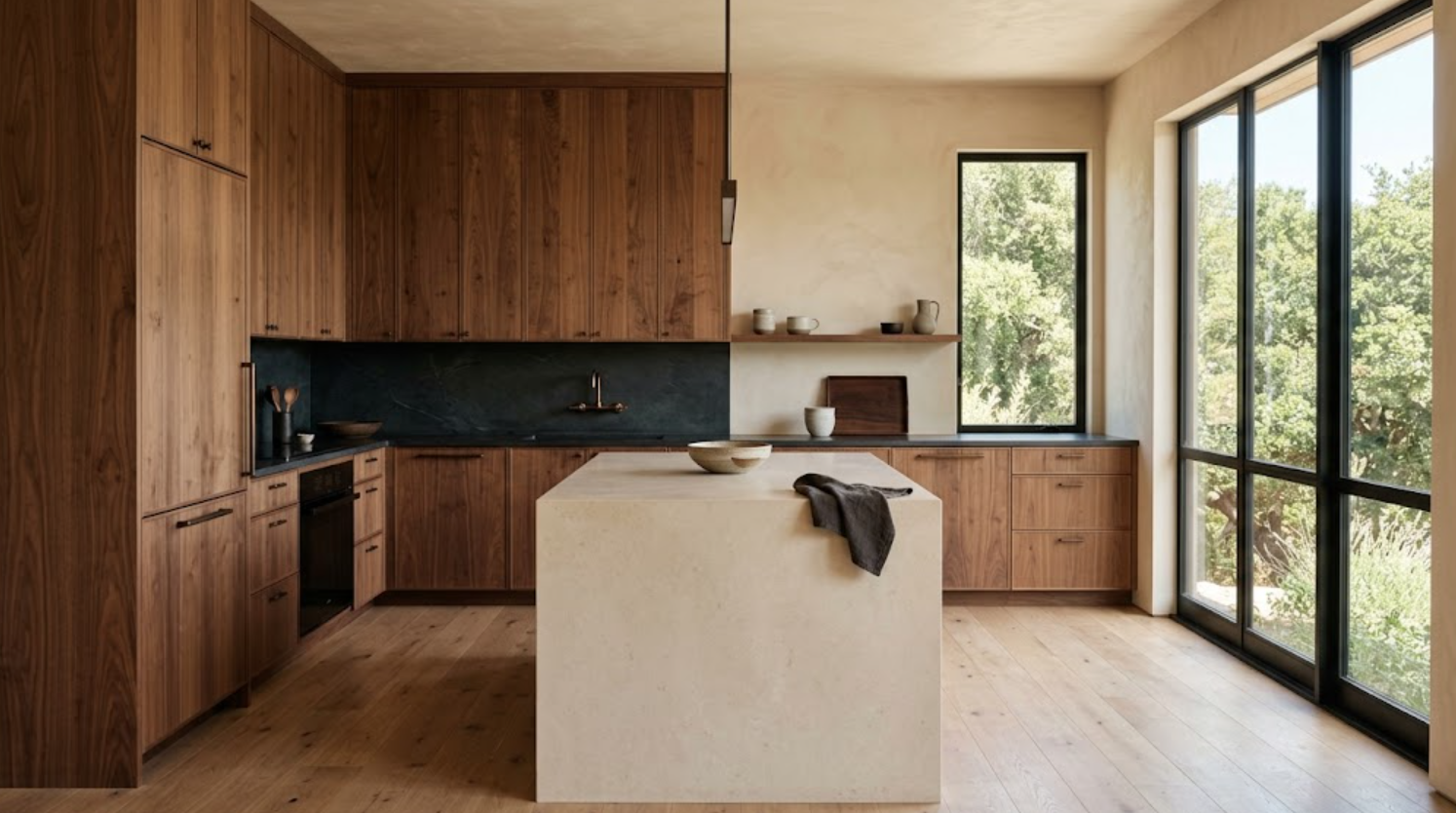
Why Do Finishes Matter as Much as the Material?
Selecting white oak or walnut is only the beginning. Finish can substantially change the material.
A stain can deepen warmth or shift undertones. A painted finish can feel soft and architectural or crisp and graphic. Honed stone creates a different atmosphere from polished stone. Hardware can appear aged, brushed, polished, or darkened.
These choices influence how materials relate to one another, which is why finishes should be compared physically rather than selected from isolated photographs.
How Does Craftsmanship Affect Material Quality?
Beautiful materials still depend on execution.
Cabinet grain alignment, consistent reveals, clean transitions, precise door proportions, hardware placement, and carefully resolved stone edges all influence how premium materials are perceived.
This becomes particularly important in simple interiors. When cabinetry has restrained door styles and minimal ornament, small inconsistencies become more visible. Precision allows the material itself to remain the focus.
Why Should Designers Look Beyond the Surface?
Cabinetry quality is not limited to the door finish. Interior construction, drawer systems, storage accessories, hardware, and functional details affect how the cabinetry performs every day.
A premium kitchen should feel considered when a cabinet is opened as well as when it is closed. Interior organization should support the way the kitchen functions rather than being treated as a separate decision at the end.
Material selection and functional specification should develop together.
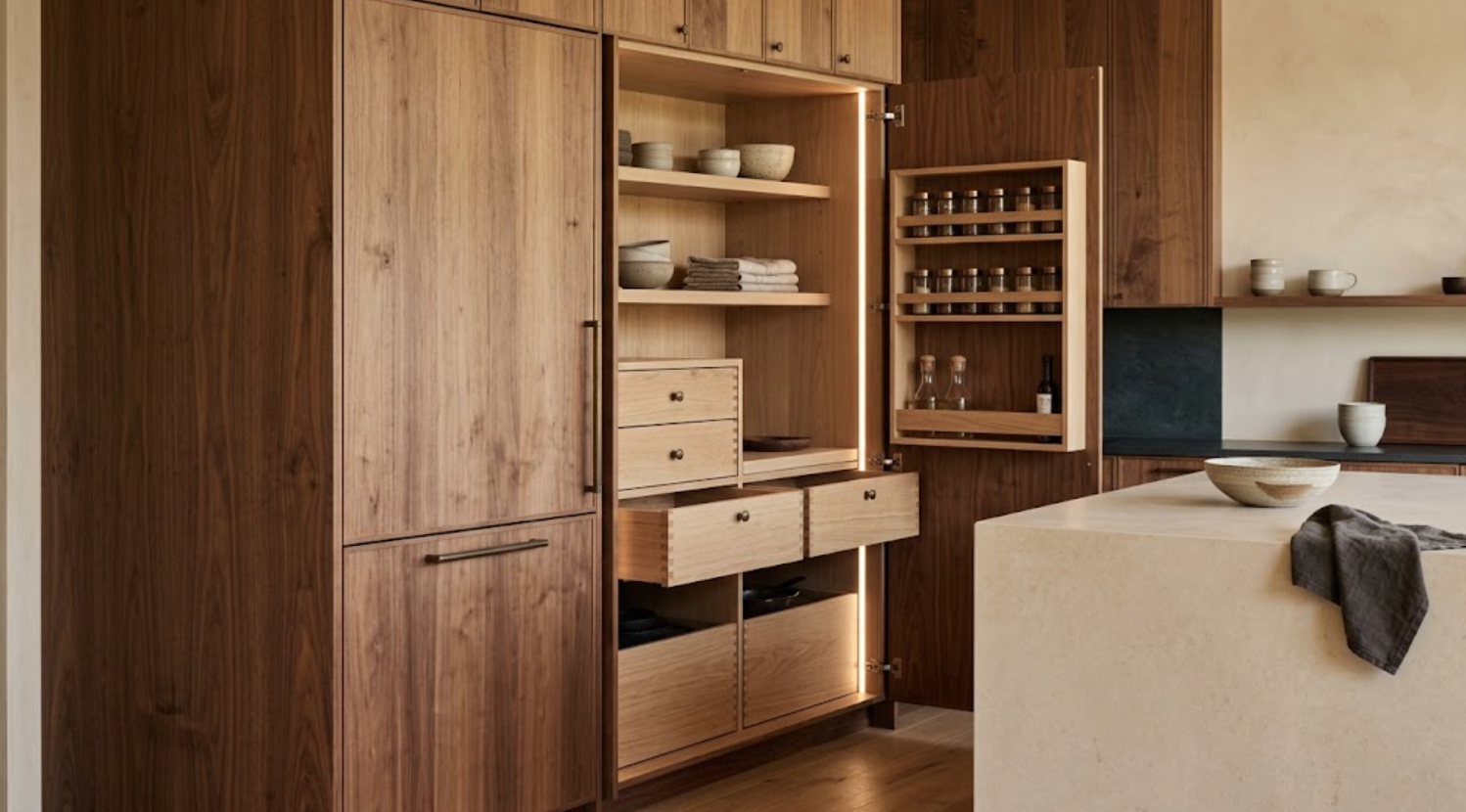
How Do Better Materials Support a More Restrained Design?
When materials have natural character, designers do not need to add as much visual information.
A carefully selected walnut cabinet wall may need little more than simple hardware. A beautiful natural slab can become the focal point without an additional patterned backsplash. Warm plaster can replace several decorative wall treatments.
This allows the design to become quieter without becoming plain.
The material earns attention through grain, movement, texture, and craftsmanship rather than through added ornament.
Does Every Material Need to Be Premium?
Not every surface needs to be the most expensive option available.
The stronger approach is to identify where material quality will have the greatest impact. Cabinetry is a major architectural element. Countertops and flooring occupy substantial visual area. Hardware is touched constantly. These decisions often deserve greater attention than smaller decorative elements.
A thoughtful palette can combine different material categories and price points while still feeling sophisticated when the hierarchy is clear.
How Do Materials Create Whole-Home Continuity?
A strong material language can extend beyond the kitchen without requiring every room to match.
White oak cabinetry in the kitchen may transition to walnut in a bar or library. Painted cabinetry may appear in bathrooms or a laundry room. Related stone undertones, hardware, or architectural details can connect those spaces.
The goal is continuity, not repetition.
This approach allows individual rooms to develop their own character while still feeling like parts of the same residence.
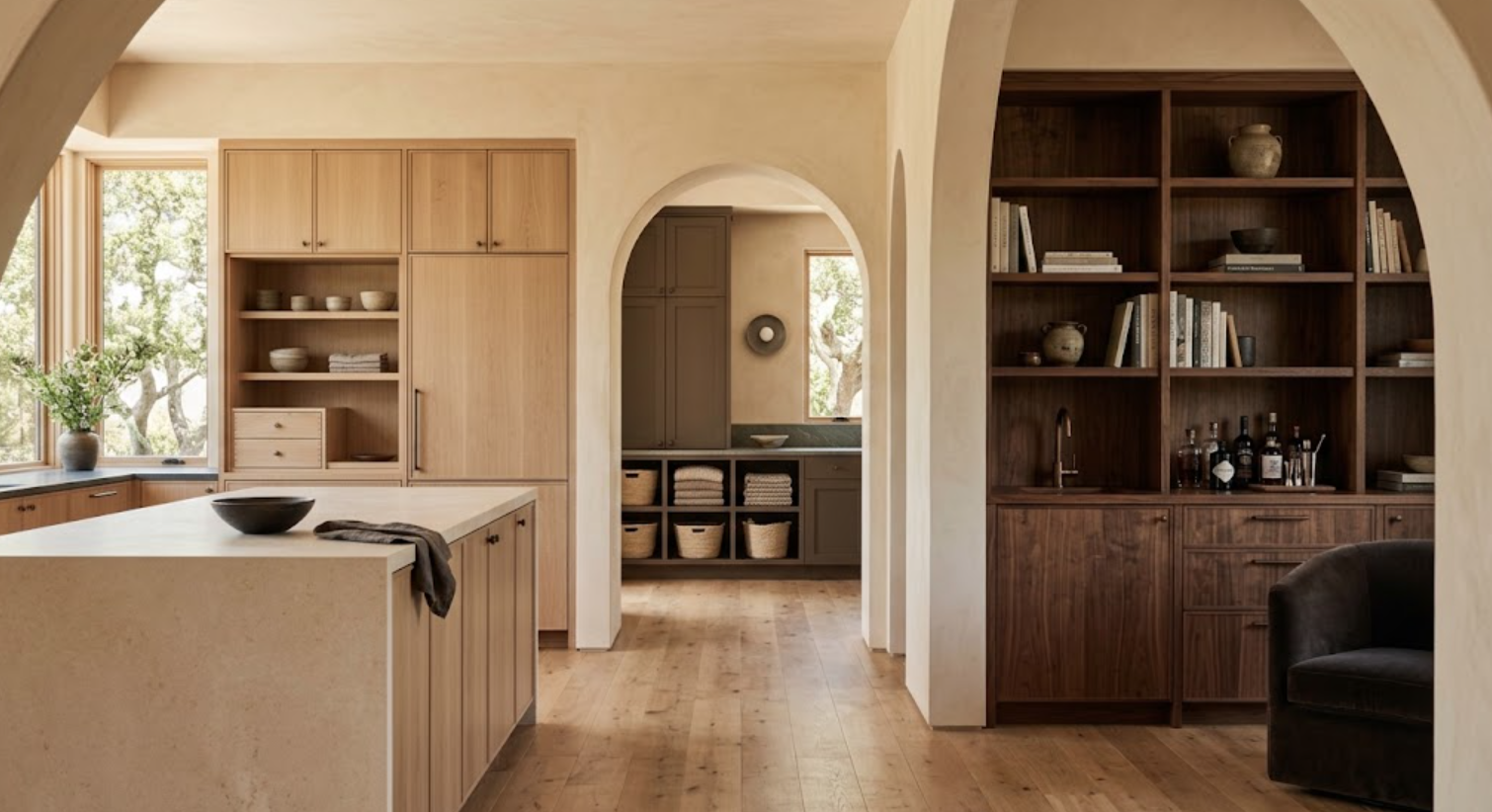
Why Is Seeing Materials Together So Important?
Materials rarely behave exactly as expected when viewed separately.
A white stone may reveal a cooler undertone beside warm oak. Bronze may look significantly darker against walnut than against painted cabinetry. Flooring can change how the cabinetry color is perceived. Natural daylight may reveal variation that artificial lighting hides.
Bringing materials together allows those relationships to be evaluated before they become permanent.
Large samples are particularly useful. Cabinet doors, stone slabs, flooring boards, hardware, and full-scale cabinetry displays provide more information than small digital references.
What Should Guide the Final Selection?
Before approving a material, consider four things: architecture, relationship, performance, and longevity.
Does the material belong in the architecture? Does it work with the cabinetry and surrounding palette? Is its performance appropriate for the way it will be used? Will its character remain meaningful beyond a short-lived trend?
When those questions are answered well, the material becomes more than a finish. It becomes part of the architecture.
The Atelier Perspective: Why Exceptional Design Begins With Better Materials
Better materials do not replace good design. They give good design stronger ingredients.
Natural wood provides grain and variation. Stone introduces mineral depth. Thoughtful finishes change how those materials interact with light. Precise cabinetry allows them to be expressed cleanly. When those decisions are coordinated rather than selected independently, the result feels more resolved.
At Atelier, the objective is not to assemble the largest possible collection of premium finishes. It is to identify the materials that deserve a place in the project and understand how they should work together.
That is where exceptional material-driven design begins.
Explore Better Materials With Atelier Design Society
Atelier Design Society works with homeowners, architects, interior designers, builders, and other design professionals developing premium cabinetry and material palettes for sophisticated Bay Area residences. At the Atelier Design Society showroom in Menlo Park, project teams can compare cabinetry materials, natural woods, painted finishes, stone, hardware, interiors, storage solutions, and full-scale installations while evaluating quality, texture, undertone, proportion, and architectural fit.
Seeing materials together makes it easier to move beyond individual samples and build a palette that works as a complete composition.