Upper cabinetry has a major influence on how a kitchen feels.
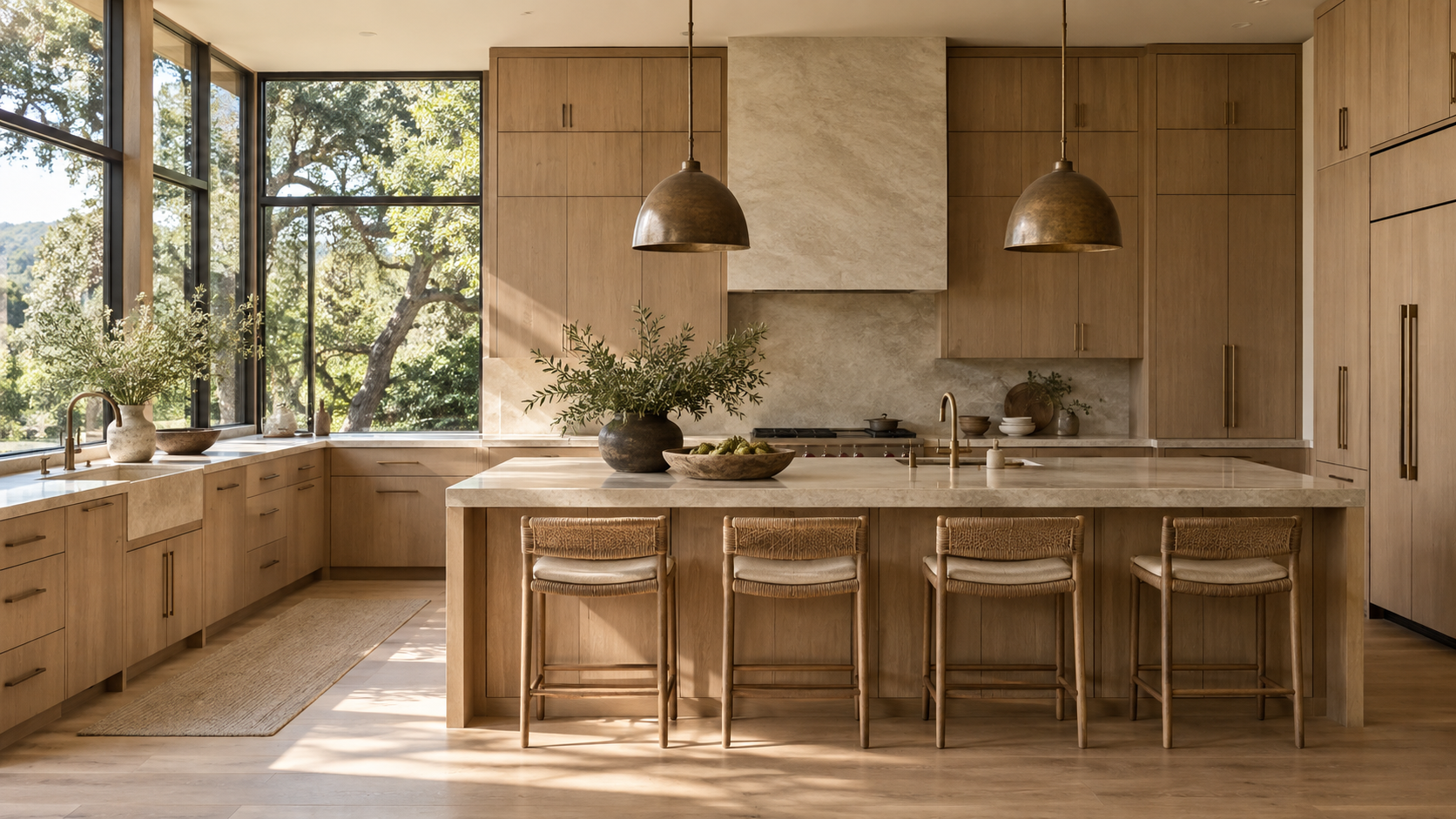
A full wall of cabinets can provide valuable storage and create a strong architectural composition. Open shelving can make the same space feel lighter and give frequently used or beautiful objects a place to remain visible.
Neither approach is inherently better. The right choice depends on how much storage you need, what you want visible, and how the upper portion of the kitchen should relate to the rest of the room.
What Do Upper Cabinets Offer?
Upper cabinets provide enclosed storage without using additional floor space. They can hold glassware, dishes, pantry items, serving pieces, and other everyday objects while keeping the kitchen visually organized.
They also contribute to the architecture of the cabinetry.
Door style, proportions, finish, hardware, and alignment with tall cabinets can create a cohesive elevation. In kitchens with limited storage elsewhere, upper cabinetry can be particularly valuable because it uses vertical space efficiently.
The important question is how much upper cabinetry the kitchen actually needs. Filling every available wall simply because storage is possible can make a room feel unnecessarily heavy.
What Does Open Shelving Change?
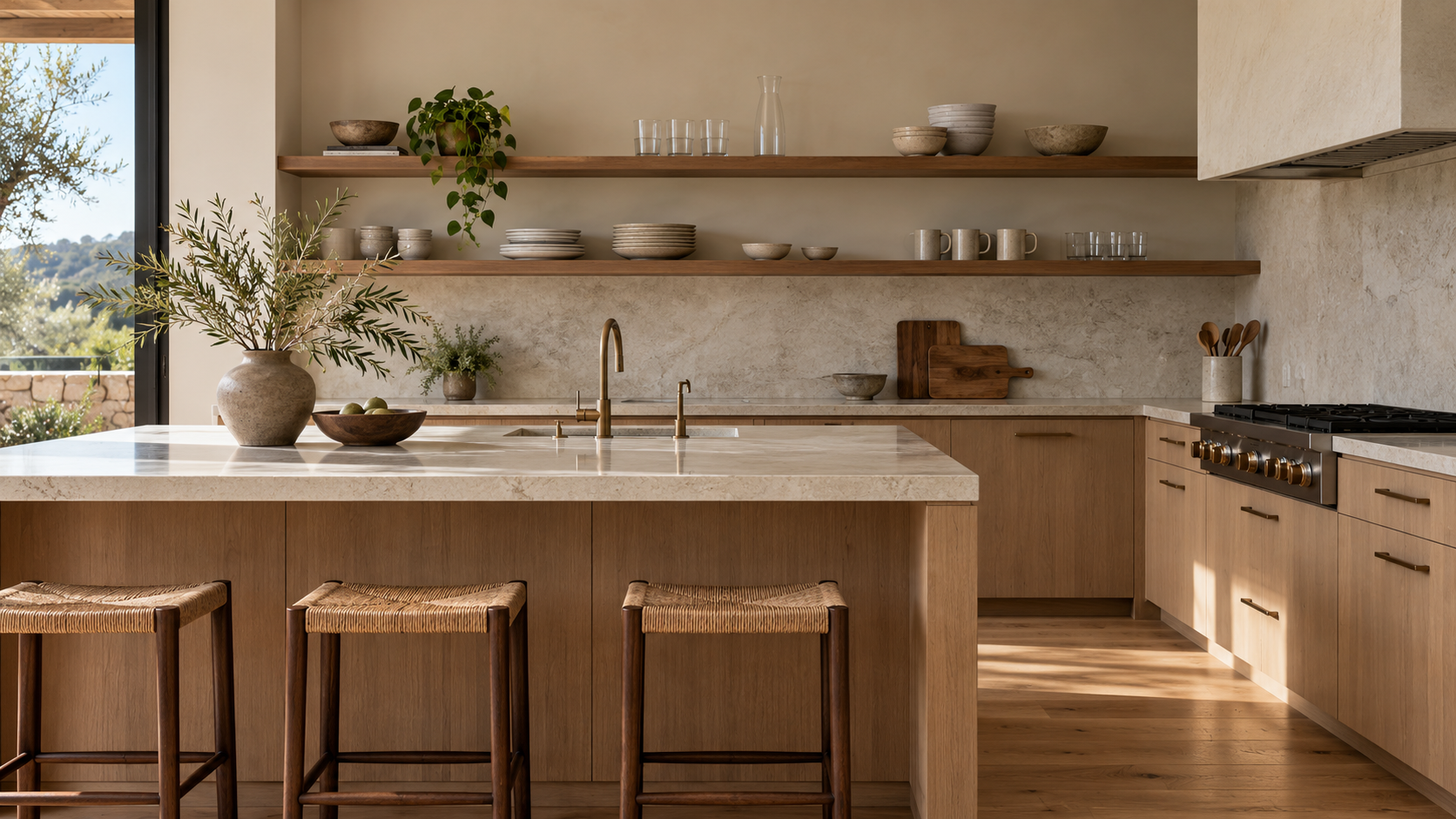
Open shelving reduces the visual weight of cabinetry and allows more of the wall material to remain visible.
It can be especially effective when the backsplash or surrounding architecture is an important part of the design. Stone, plaster, tile, or another expressive material can continue behind the shelves rather than being largely covered by cabinetry.
Shelving also makes frequently used pieces immediately accessible.
The tradeoff is visibility. Everything stored on an open shelf becomes part of the room's composition. Dishes, glassware, cookware, and decorative objects remain exposed rather than disappearing behind a cabinet door.
For households that prefer visually quiet surfaces, that distinction matters.
How Much Storage Do You Actually Need?
Before removing upper cabinets, understand where their contents will go.
A kitchen with a large pantry wall, generous island storage, and substantial lower cabinetry may have enough capacity to use fewer uppers. A smaller kitchen may depend heavily on vertical storage.
Inventory the items that need to live in the kitchen, then determine which deserve the most accessible locations.
Frequently used dishes may work on an open shelf. Less attractive packaging, specialty equipment, and miscellaneous items are usually easier to manage behind doors.
Storage planning should happen before deciding that a wall will look better without cabinets.
What Should Go on Open Shelves?
Open shelving works best when its contents are intentionally limited.
Everyday dishes, glasses, serving pieces, or a small selection of objects can work well because they are frequently used and naturally belong in the kitchen.
Items used regularly also spend less time collecting dust.
Shelves filled with too many unrelated objects can quickly make a kitchen feel busier than intended. Before choosing open shelving, consider whether you genuinely want the items stored there to remain visible every day.
This is one reason showroom-perfect shelves do not always translate directly to real life. The design needs to accommodate the household's actual belongings, not only the objects selected for photography.
Can You Combine Upper Cabinets and Open Shelving?
Yes, and this can provide a useful balance.
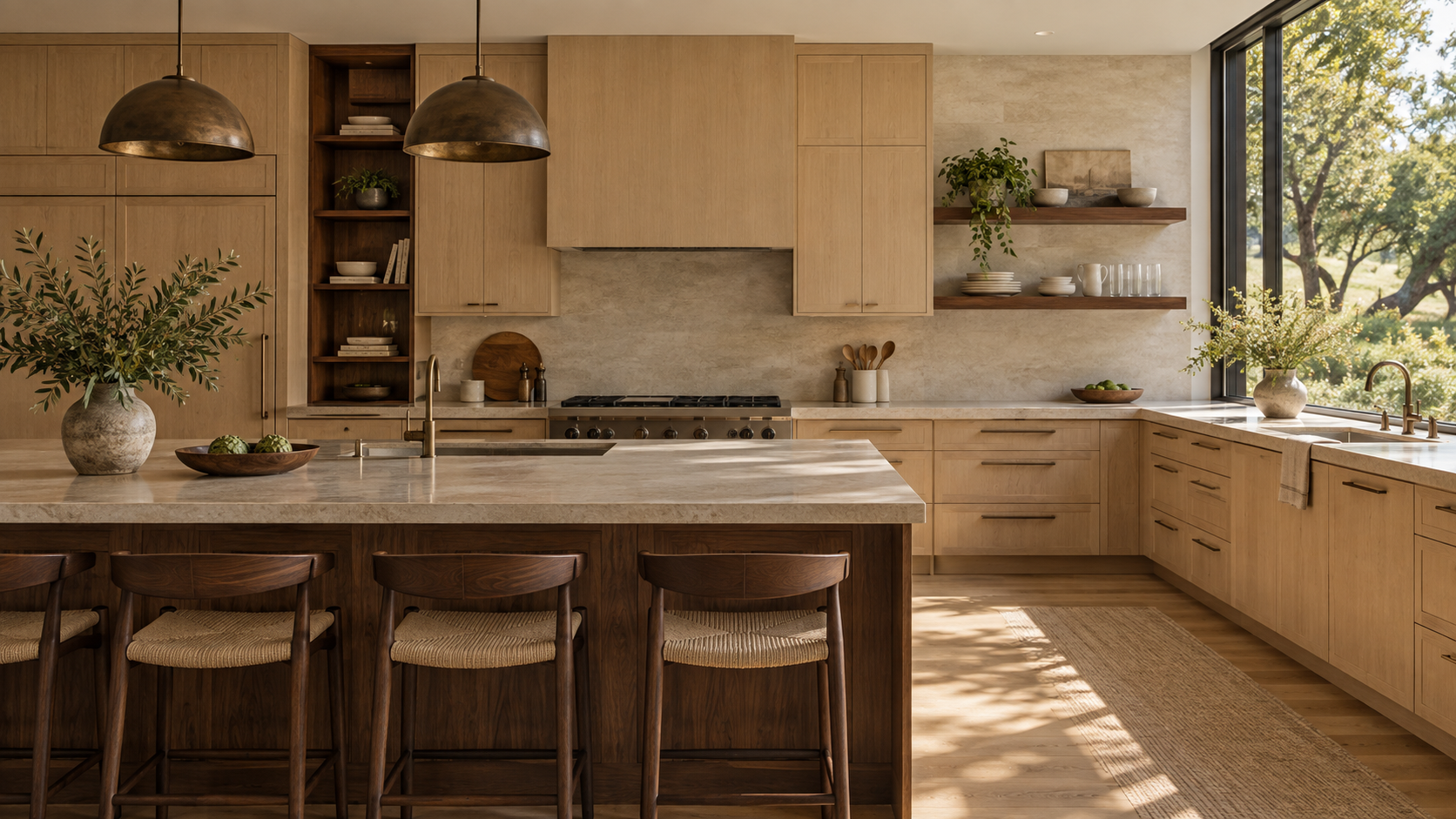
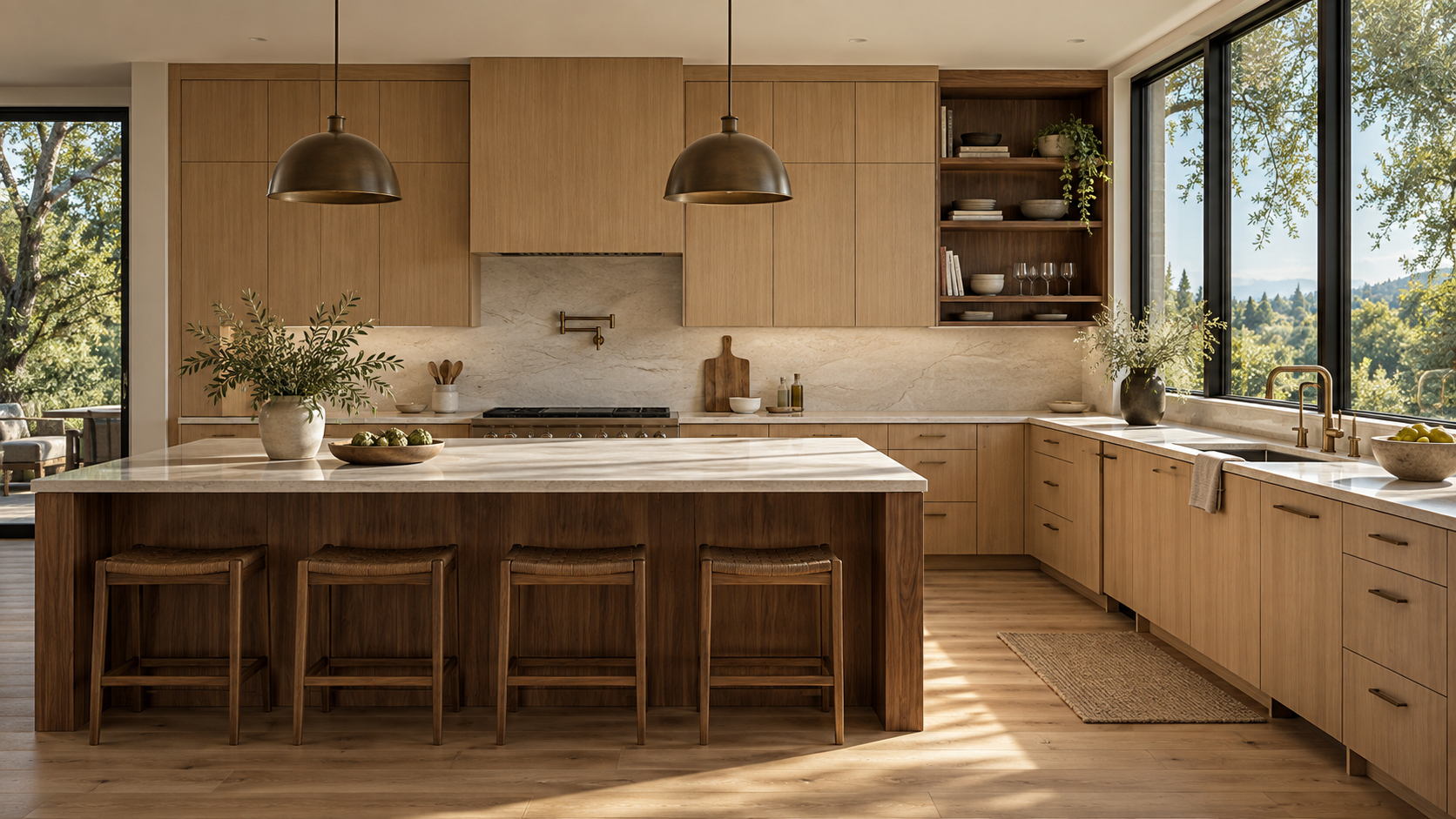
Enclosed cabinetry can handle the majority of storage while a smaller section of open shelving creates visual relief. Shelves might appear near a window, beside a range hood, above a beverage area, or in another location where full upper cabinetry is not necessary.
The materials should still feel connected.
A walnut shelf can relate to an island or other wood element. A white oak shelf can continue the cabinetry material. Stone extending behind the shelving can connect the countertop and backsplash.
The combination should feel intentional rather than like cabinetry was simply removed from one section.
How Do Cleaning and Maintenance Compare?
Enclosed cabinets protect their contents from much of the dust and cooking residue that can settle on exposed surfaces.
Open shelves require more regular attention because both the shelves and their contents remain exposed. The amount of maintenance can vary depending on their location.
Shelves positioned close to a cooking area may need more frequent cleaning than those located farther away.
Material choice matters too. Wood, stone, metal, and painted shelving each have different maintenance characteristics, so the selected surface should be appropriate for its location and intended use.
How Do Upper Cabinets Affect the Scale of the Room?
Upper cabinetry can make a kitchen feel more architectural when its proportions are carefully considered.
Tall cabinets that relate to ceiling height, windows, range hoods, and adjacent pantry cabinetry can create strong vertical lines and make the room feel intentionally composed.
But cabinetry does not always need to extend across every wall.
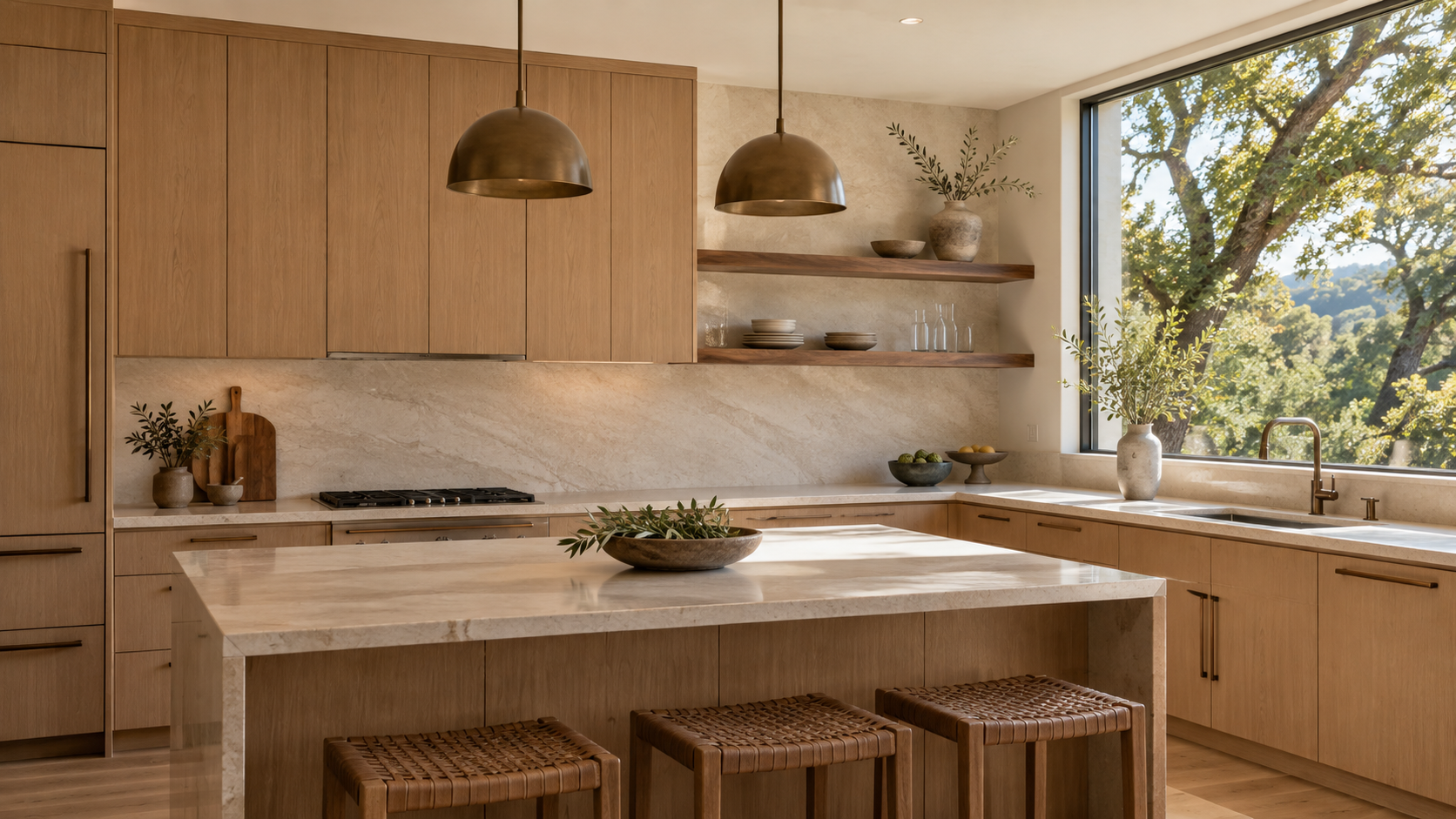
In rooms with beautiful windows, significant natural light, or expressive backsplash materials, leaving portions of the upper wall open can allow those architectural elements to become more prominent.
The decision should be made as part of the entire elevation rather than cabinet by cabinet.
Which Option Works Better in a Smaller Kitchen?
The answer depends on the storage available elsewhere.
Open shelves can make a compact kitchen feel visually lighter, but removing useful upper cabinetry may create a storage problem that ultimately makes countertops more cluttered.
In that situation, well-proportioned enclosed cabinetry may actually create the calmer kitchen.
Glass-front cabinets, a limited section of shelving, or fewer strategically placed upper cabinets can provide alternatives between two extremes.
The objective should be to balance storage capacity with visual openness rather than sacrificing one entirely for the other.
How Should You Decide?
Start with storage.
Determine what needs to remain in the kitchen and where those items can realistically live. Then consider what you are comfortable leaving visible and how much maintenance you want to manage.
Finally, study the architecture. Windows, ceiling height, backsplash materials, tall cabinetry, and natural light can all influence whether a wall benefits from upper cabinets, shelving, or simply more open space.
You do not need to choose one approach for the entire kitchen. Often, the most successful solution uses enclosed cabinetry where storage matters most and open shelving only where it genuinely improves the room.
Explore Kitchen Cabinetry at Atelier Design Society
Atelier Design Society works with homeowners, architects, interior designers, builders, and other design professionals planning premium cabinetry for Bay Area kitchens. At the Atelier Design Society showroom in Menlo Park, project teams can compare cabinetry materials, upper cabinet configurations, open shelving, storage solutions, hardware, and full-scale installations while developing the right balance between function and visual openness.