What Defines Luxury Cabinetry? A Bay Area Homeowner’s Guide
Walk into two beautiful Bay Area kitchens and, at first glance, they may not seem that different. Both can have stone countertops, beautiful lighting, new appliances, and cabinetry in a finish you would save to an inspiration board.
The difference often becomes clearer when you start using the space.
One kitchen was designed around standard cabinet dimensions. The other was considered down to the inch: where the cabinetry meets the ceiling, how appliances disappear into the design, what happens in an awkward corner, where everyday items are stored, and how the materials relate to the architecture of the home.
That is where luxury cabinetry begins.
For homeowners planning projects in Menlo Park and across the Peninsula, luxury cabinetry is less about adding more and more about making better decisions. The goal is cabinetry that looks intentional, functions naturally, and feels like it was always meant to be part of the home.
What Actually Makes Cabinetry Luxury?
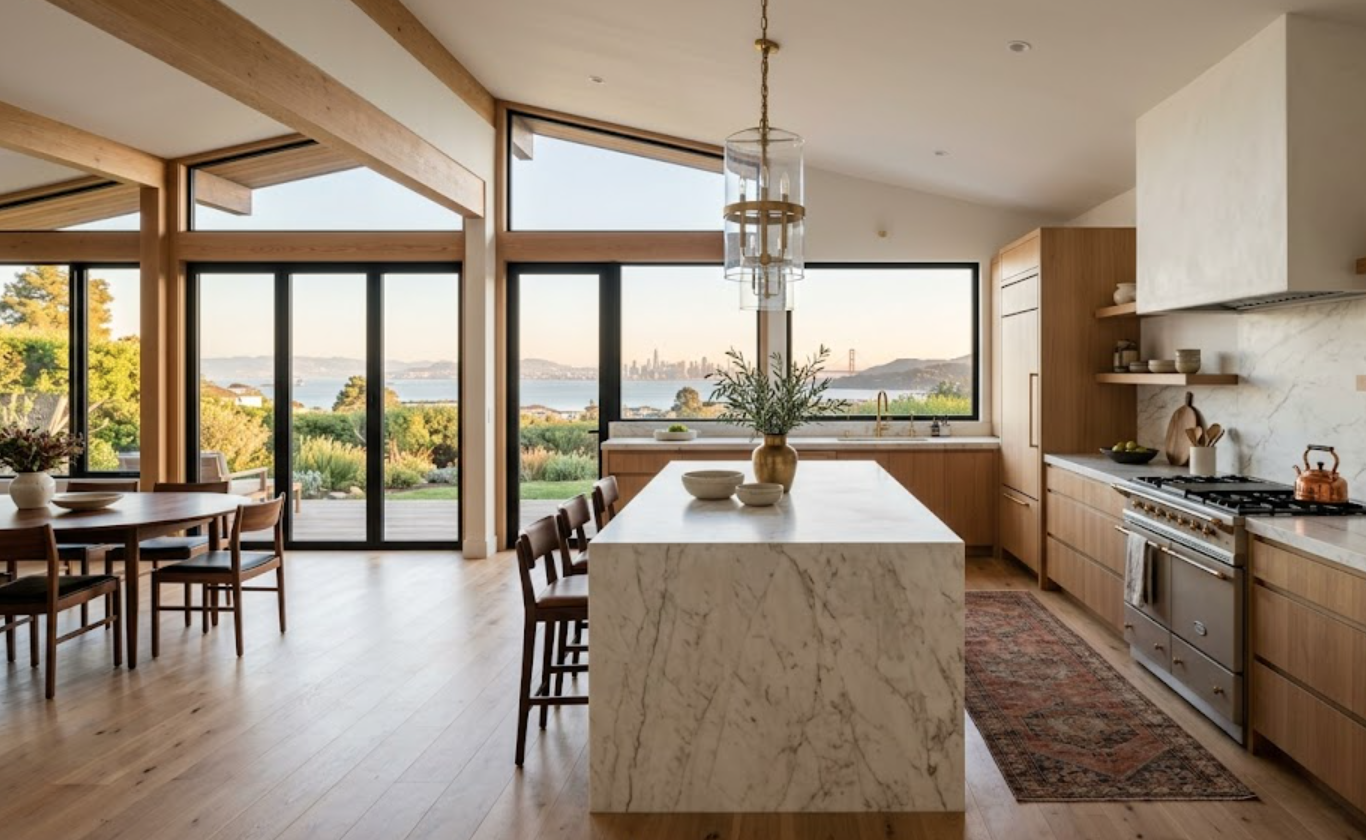
Luxury cabinetry combines high-quality construction, thoughtful design, premium materials, customization, and precise installation to create cabinetry specifically suited to the home and the people using it.
Price alone does not make a cabinet luxurious. The difference is usually found in details that are easy to overlook in photographs: proportions that make sense for the room, consistent spacing, doors and drawers that feel substantial, finishes that hold up to daily use, and storage designed around what actually needs to go inside it.
Good cabinetry also knows when to disappear. A refrigerator can feel like part of a wall of cabinetry rather than a large appliance interrupting it. A coffee station can be concealed when it is not being used. Storage can extend to the ceiling without making the kitchen feel heavy.
None of those decisions needs to call attention to itself. Together, however, they change how the entire room feels.
How Is Custom Cabinetry Different From Standard Cabinets?
Standard cabinets ask a room to work within predetermined dimensions. Custom cabinetry gives the design more freedom to work with the room.
That distinction can matter considerably in Peninsula homes.
An older Palo Alto property may have dimensions that were never intended for today's standard kitchen layouts. A Menlo Park remodel may involve opening several rooms and needing the new cabinetry to relate to the architecture beyond the kitchen. Larger homes in Atherton or Woodside may require cabinetry across several spaces, each with a different purpose.
With a more customized cabinetry approach, unusual dimensions do not automatically have to become filler panels, unused gaps, or design compromises.
The cabinetry can respond to the house. That flexibility is one reason homeowners researching custom cabinetry in the Bay Area often look beyond standard cabinet options when planning a substantial renovation.
Which Cabinet Materials Feel Luxurious Without Looking Overdone?
There is no single “luxury” material.
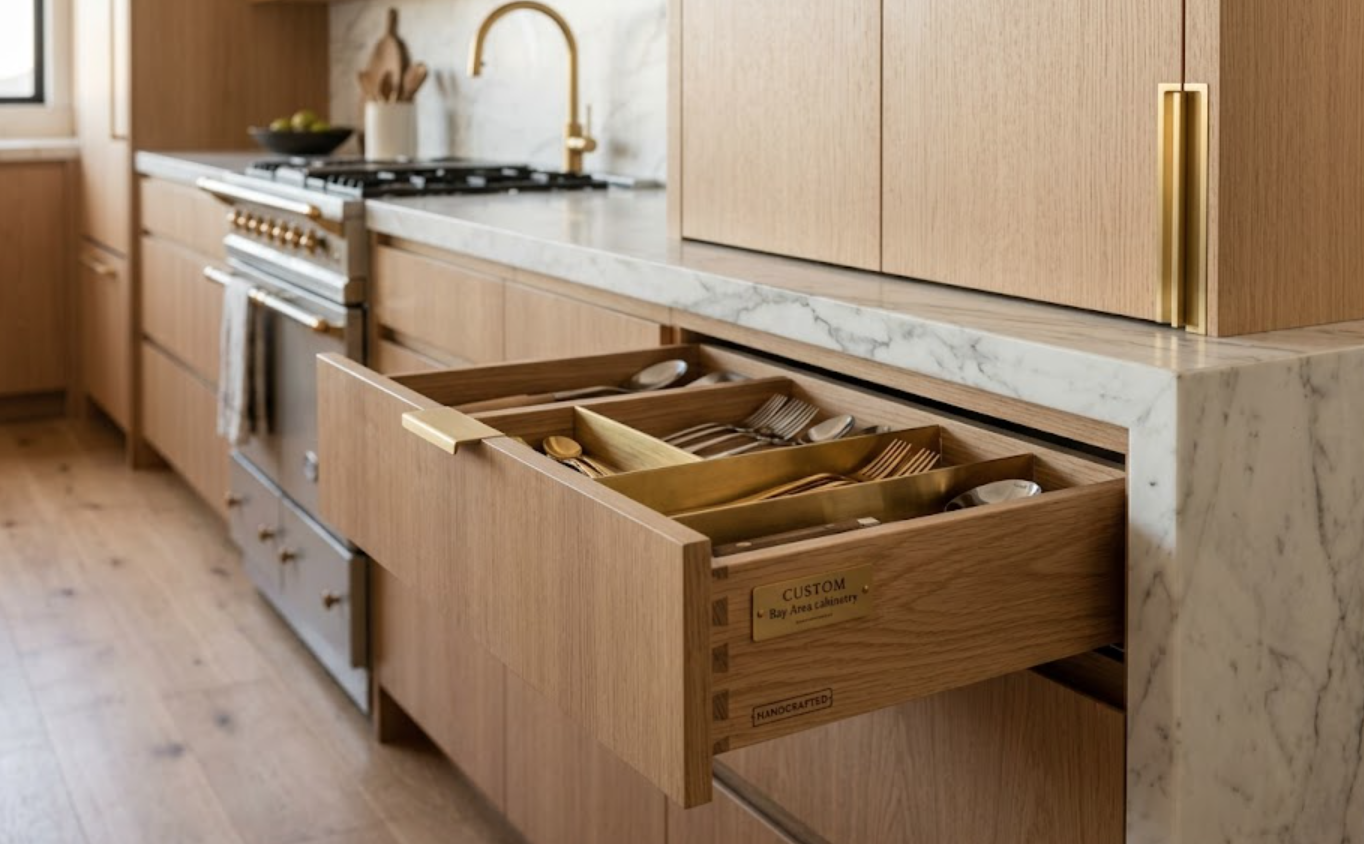
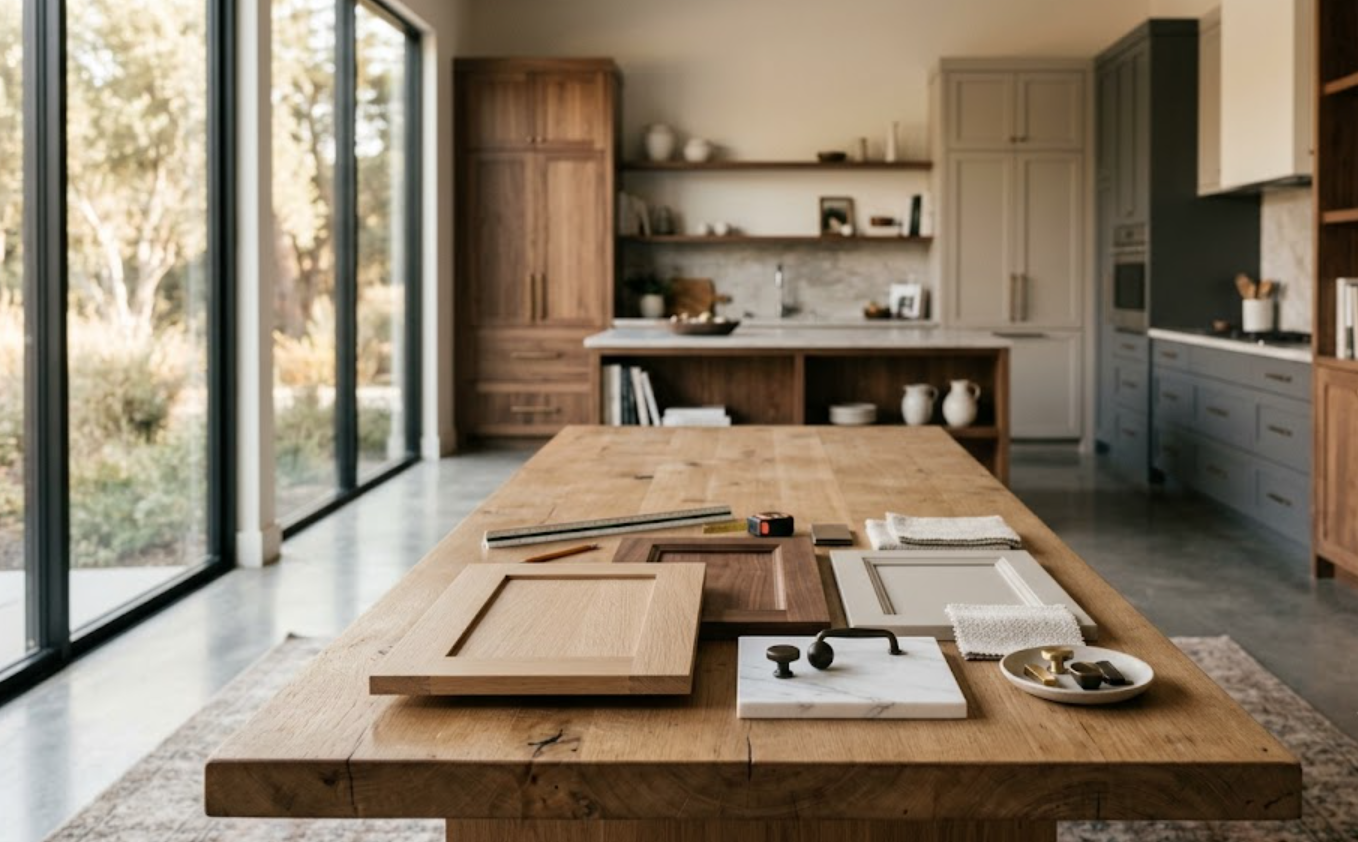
For some homes, warm walnut may be exactly right. In others, white oak can create a quieter, more natural backdrop. Painted cabinetry can work beautifully when the architecture calls for color rather than prominent wood grain.
The important part is how those materials are used.
Wood grain should be considered across an entire elevation, not just on a small sample. Painted finishes need to work with the countertops, flooring, hardware, and light in the room. Mixing materials can add depth, but only when there is a reason for the combination.
And Bay Area natural light can change a finish considerably throughout the day. That is why a material that looks perfect on a screen should never be the final word.
What Should You Notice When Looking at High-End Cabinets?
Look past the door style first:
Open the drawers.
Look inside the cabinets.
Pay attention to how the doors align.
Notice how corners are resolved and how finished ends are treated.
Consider what happens where the cabinetry meets the ceiling, floor, appliances, and adjacent walls.
Then look at the room from farther away:
Do the proportions feel balanced?
Is one section unnecessarily heavy?
Are appliances visually integrated?
Does the cabinetry complement the architecture, or does it feel like a separate layer placed on top of it?
Luxury cabinetry tends to hold up at both distances. It should be impressive when you examine the details and equally convincing when you simply walk into the room.
How Much Does Function Matter in a Luxury Kitchen?
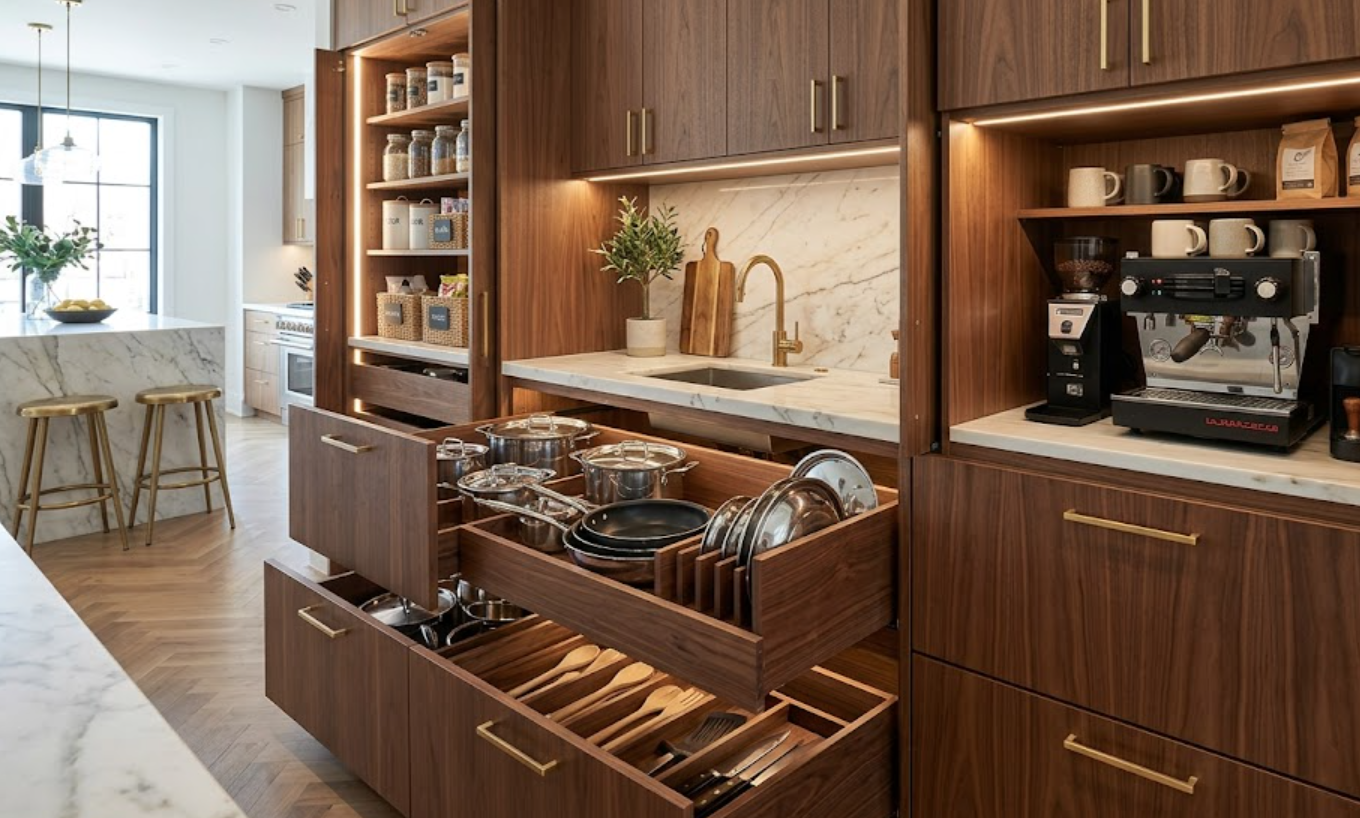
A great deal. Luxury kitchen cabinetry should make everyday routines simpler, not just make the kitchen more attractive.
Before deciding how many drawers a kitchen needs, it helps to understand how the kitchen actually works:
Where do groceries land when you walk in?
Where is coffee made every morning?
Which appliances stay out?
Who cooks?
Does more than one person cook at the same time?
Where do guests naturally gather?
Those questions lead to better cabinetry decisions than simply adding storage wherever space allows.
A household that entertains frequently might benefit from a separate beverage area. Someone who dislikes countertop clutter may prioritize concealed appliance storage. A serious home cook may care more about wide drawers near the range than decorative upper cabinetry.
More storage is not automatically better. Useful storage is better.
Does Luxury Cabinetry Have to Look Traditional?
No. Luxury describes the quality and thought behind the cabinetry, not its aesthetic.
A contemporary home might call for frameless cabinetry, simple hardware, and uninterrupted surfaces. Another project might feel right with inset cabinetry, painted finishes, or more architectural detailing.
Rather than asking which cabinet style looks the most expensive, ask which one makes sense for the house.
A well-designed kitchen should still feel connected to the architecture when today's trends have moved on.
Where Else Does Custom Cabinetry Make Sense?
The kitchen may be the most obvious place for cabinetry, but it does not have to be the only one.
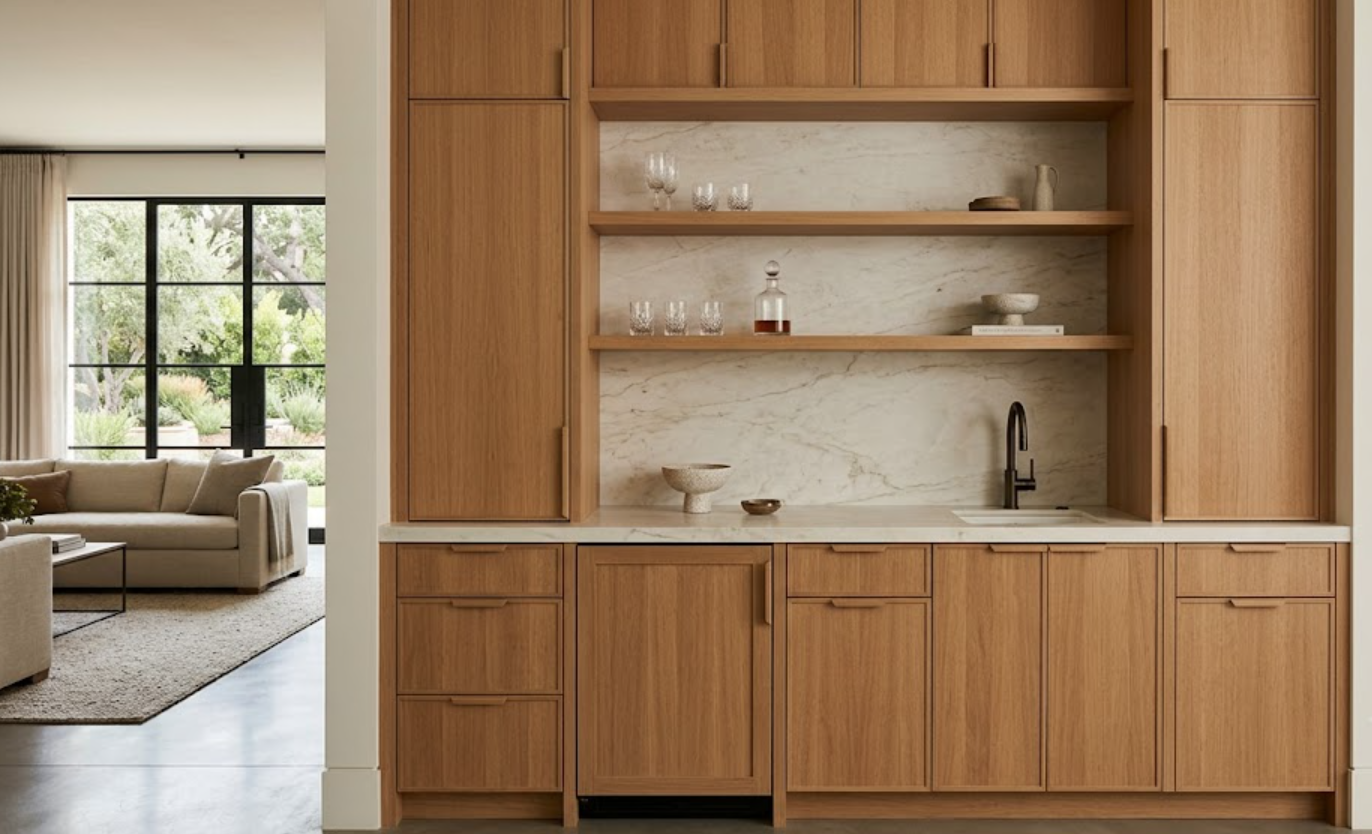
Bathrooms, home offices, wardrobes, bars, libraries, laundry rooms, media spaces, and built-ins all have different storage problems to solve.
The goal is not to copy the kitchen cabinetry into every room.
A more considered approach might repeat a wood species, hardware finish, proportion, or small architectural detail while allowing each room to develop its own character.
That creates continuity without making the house feel like a showroom.
Why Visit a Cabinet Showroom Instead of Choosing Everything Online?
Because cabinetry is something you need to see and use, not just look at.
A photograph can help establish a direction. It cannot show exactly how a finish responds to light, how a drawer feels when it closes, how two wood samples compare in person, or how different construction methods affect the final appearance.
This becomes especially important when making decisions that will affect an entire kitchen or several rooms in a home.
At a cabinet showroom in Menlo Park, homeowners can compare door styles, finishes, construction details, and materials at full scale rather than making expensive decisions from small samples and saved images.
A good showroom visit should leave you with fewer questions, not more options.
What Should Bay Area Homeowners Decide Before Choosing Cabinetry?
Start with the problems you want the cabinetry to solve.
Think about the architecture of the house, what is not working in the existing space, how much storage you genuinely need, which appliances will be incorporated, and how you want the room to feel.
Then consider aesthetics. That order matters.
It is much easier to select a beautiful finish once you understand what the cabinetry itself needs to accomplish.
For a significant kitchen or whole-home renovation, it is also worth discussing cabinetry early in the design process. Cabinet dimensions and layouts can affect appliances, electrical planning, plumbing, countertops, lighting, and circulation through the room.
Cabinetry should not be the detail everyone figures out at the end.
So, What Defines Luxury Cabinetry?
Luxury cabinetry is cabinetry designed specifically for the home, built with attention to materials and construction, and planned around how the space will actually be used.
It does not need to be ornate. It does not need to announce how much it cost.
The best examples often feel surprisingly simple because every dimension, material, and functional decision has already been resolved.
For homes throughout Menlo Park and the Peninsula, where architecture and project requirements can vary considerably from one property to another, that level of consideration is often what separates cabinetry that simply fills a room from cabinetry that completes it.
Explore Luxury Cabinetry in Menlo Park
If you're planning a kitchen, bathroom, or whole-home cabinetry project, seeing the options in person is a useful place to begin.
Atelier Design Society works with homeowners and design professionals exploring premium and custom cabinetry for Bay Area homes.
Visit the Menlo Park showroom to compare cabinetry, materials, finishes, and design possibilities for your project.