
Some of the most impressive kitchens are also the most understated. They do not rely on dramatic finishes, oversized decorative elements, or an abundance of expensive materials to communicate quality.
Instead, their character comes from carefully considered proportions, natural materials, precise cabinetry details, and a sense of balance throughout the space.
A beautifully designed kitchen may feature simple white oak cabinetry, restrained hardware, and a quiet natural stone countertop, yet feel more refined than an interior filled with statement features.
A kitchen feels genuinely luxurious when its materials, craftsmanship, and architectural details work together without competing for attention.
Start With Proportions Rather Than Decoration
One of the most important qualities of a refined kitchen is proportion.
Cabinet widths, door heights, island dimensions, and the relationship between cabinetry and surrounding architecture all influence how the space feels.
When these elements are balanced, the kitchen appears organized and intentional.
Floor-to-ceiling cabinetry can create a continuous architectural appearance, while carefully aligned drawer fronts and integrated appliances help establish visual consistency.
An oversized island, unnecessarily complicated cabinetry arrangement, or poorly scaled decorative elements can make even an expensive kitchen feel less considered.
The objective is not to maximize every dimension but to select proportions that respond naturally to the room.
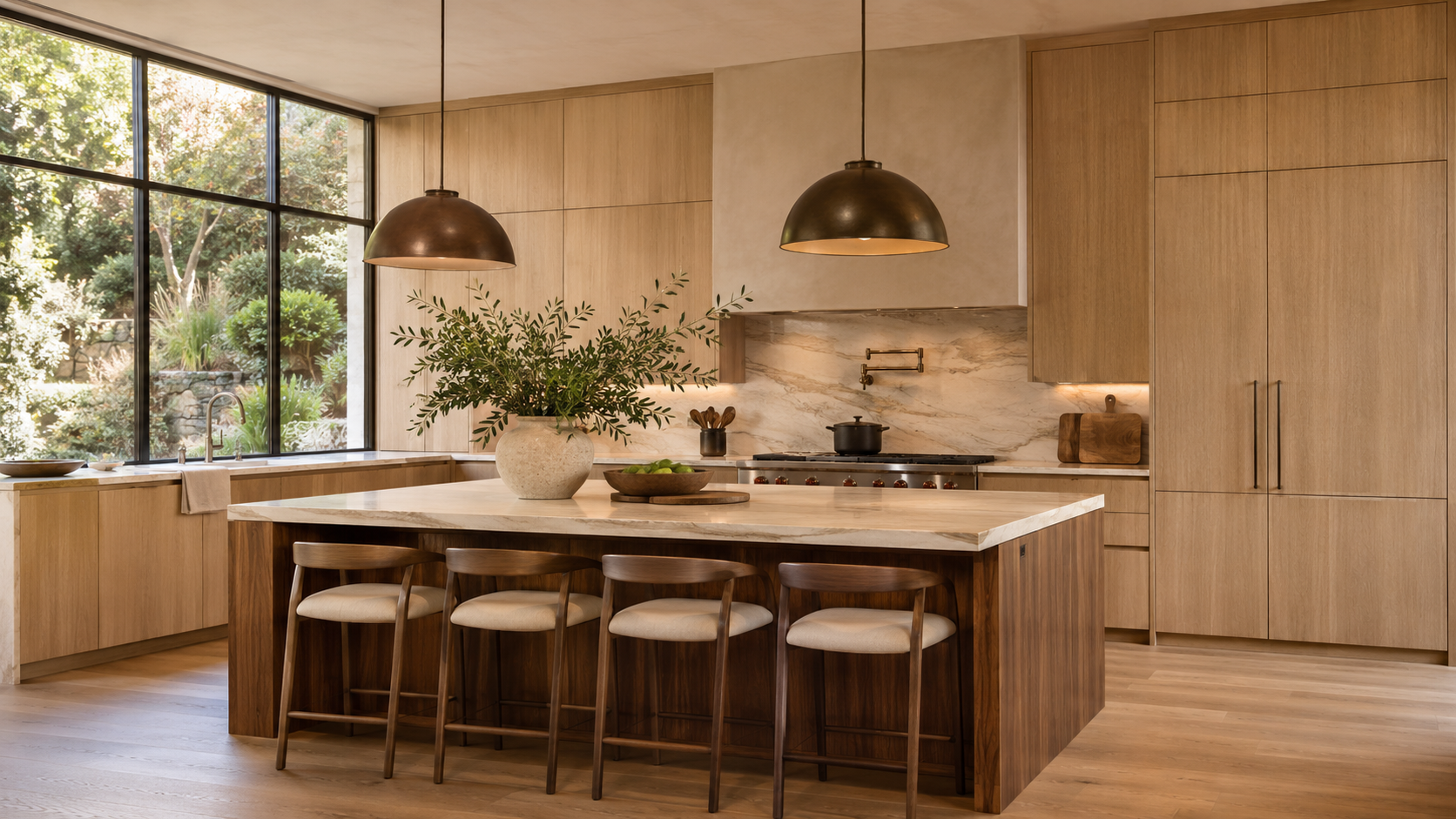
Choose Materials With Natural Character
Beautiful materials do not need to be visually dramatic to make an impression.
Natural walnut, white oak, limestone, and quartzite can introduce depth through their inherent texture and variation.
The grain of a carefully selected wood veneer or the subtle movement of natural stone can provide enough visual interest without additional ornamentation.
Material quality also influences how a kitchen ages.
A thoughtfully selected wood finish may develop a richer character over time, while natural stone offers unique variation that cannot be replicated exactly.
However, material selection should also consider practical requirements, including maintenance, durability, and the way each surface will be used.
The most refined kitchens balance visual character with everyday functionality.
Let One Material Take the Lead
A kitchen can quickly feel overwhelming when every material is intended to become a focal point.
Highly expressive stone, dramatic cabinetry finishes, prominent hardware, and decorative lighting may all be beautiful individually, but together they can compete for attention.
A more restrained approach establishes a clear hierarchy.
For example, richly grained walnut cabinetry may become the primary feature, supported by quiet stone and minimal hardware.
Alternatively, a distinctive natural stone backsplash can take visual priority while the cabinetry remains simple and understated.
Luxury often comes from knowing which elements deserve attention and which should provide a quieter background.
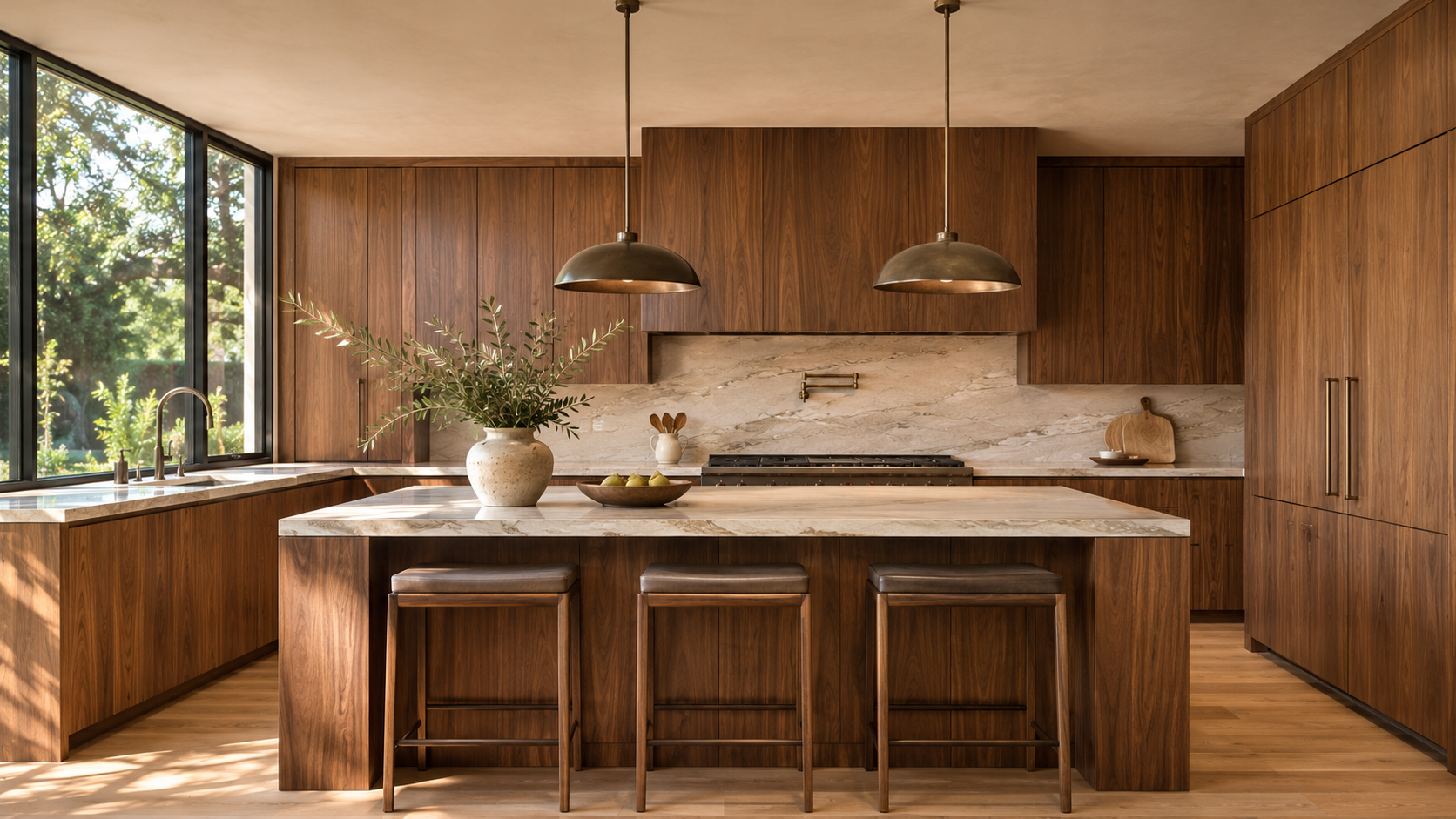
Pay Attention to the Details Most People Overlook
Some of the most meaningful differences between standard and premium cabinetry are found in the smallest details.
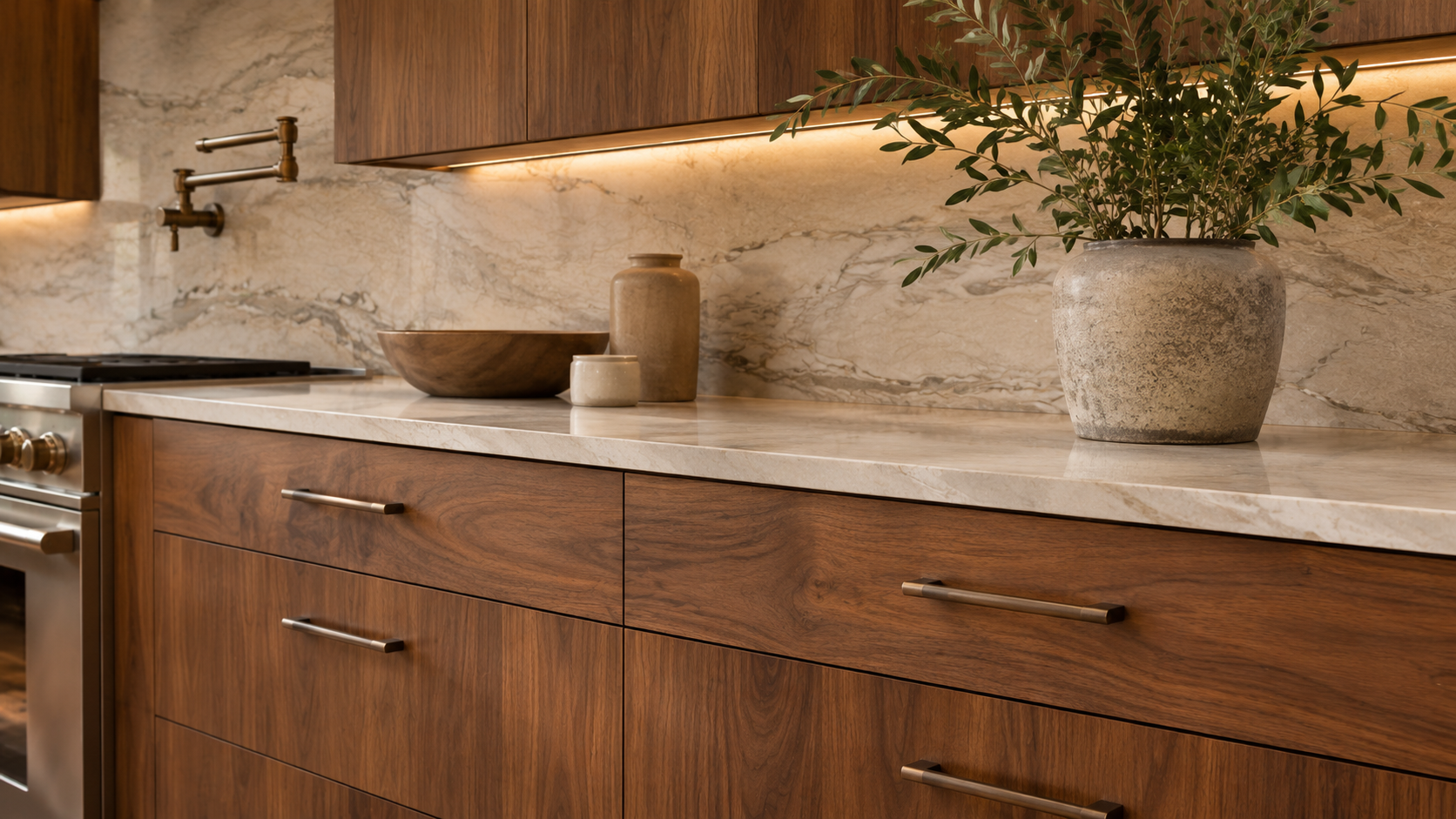
Consistent door reveals, carefully aligned drawers, precise edge treatments, and thoughtfully placed hardware contribute to a more finished appearance.
These elements may not immediately attract attention, but they influence how the entire kitchen is perceived.
For example, a wall of slab cabinetry with aligned doors and coordinated wood grain can feel exceptionally refined without any decorative molding.
Similarly, carefully proportioned drawer fronts can make a kitchen island appear more architectural and less like a collection of individual storage compartments.
The quality of cabinetry construction, hardware, and finishing systems also matters because these elements affect daily use.
A kitchen should feel as considered when opening a drawer as it does when viewed from across the room.
Integrate Appliances Into the Architecture
Visible appliances are not necessarily incompatible with luxury design, but their placement should feel intentional.
Panel-ready refrigerators and dishwashers can help create a more continuous cabinetry composition when integrated correctly.
Tall appliance panels may align with surrounding pantry doors, while wall ovens can be positioned within carefully proportioned cabinet elevations.
The goal is to reduce unnecessary visual interruptions.
However, integrated appliances require early coordination with the cabinetry design. Manufacturer specifications, ventilation requirements, clearances, and service access must all be considered.
When planned properly, appliance integration allows cabinetry and architectural materials to define the space.
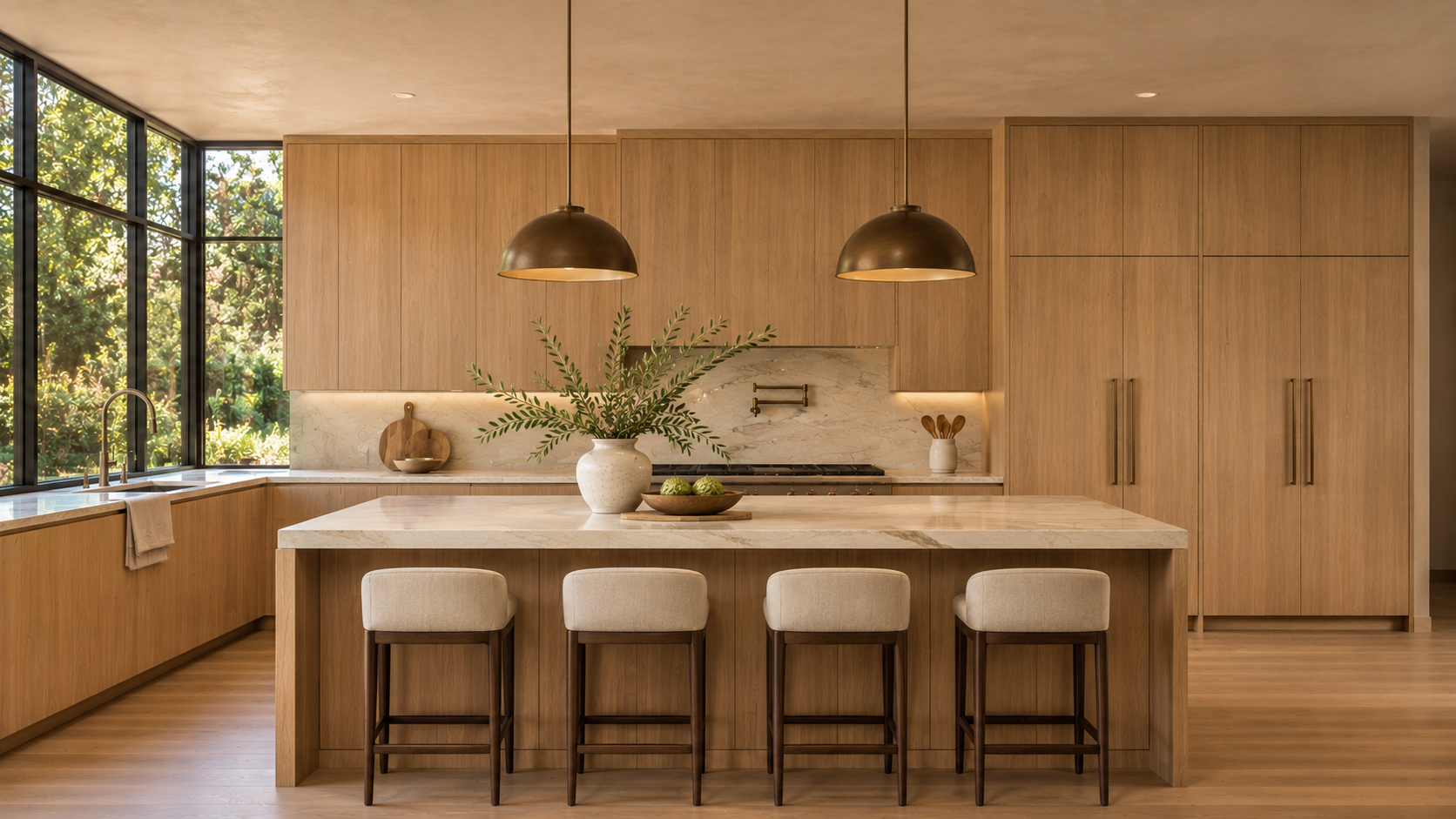
Use a Restrained Color Palette
A limited color palette can create a sense of continuity and allow the materials to speak for themselves.
Warm white, taupe, natural oak, walnut, and soft charcoal are examples of finishes that can work together without overwhelming the interior.
However, a restrained palette does not mean everything must be the same color.
Subtle differences in undertones, wood grain, and surface texture can create depth even when the overall color range is narrow.
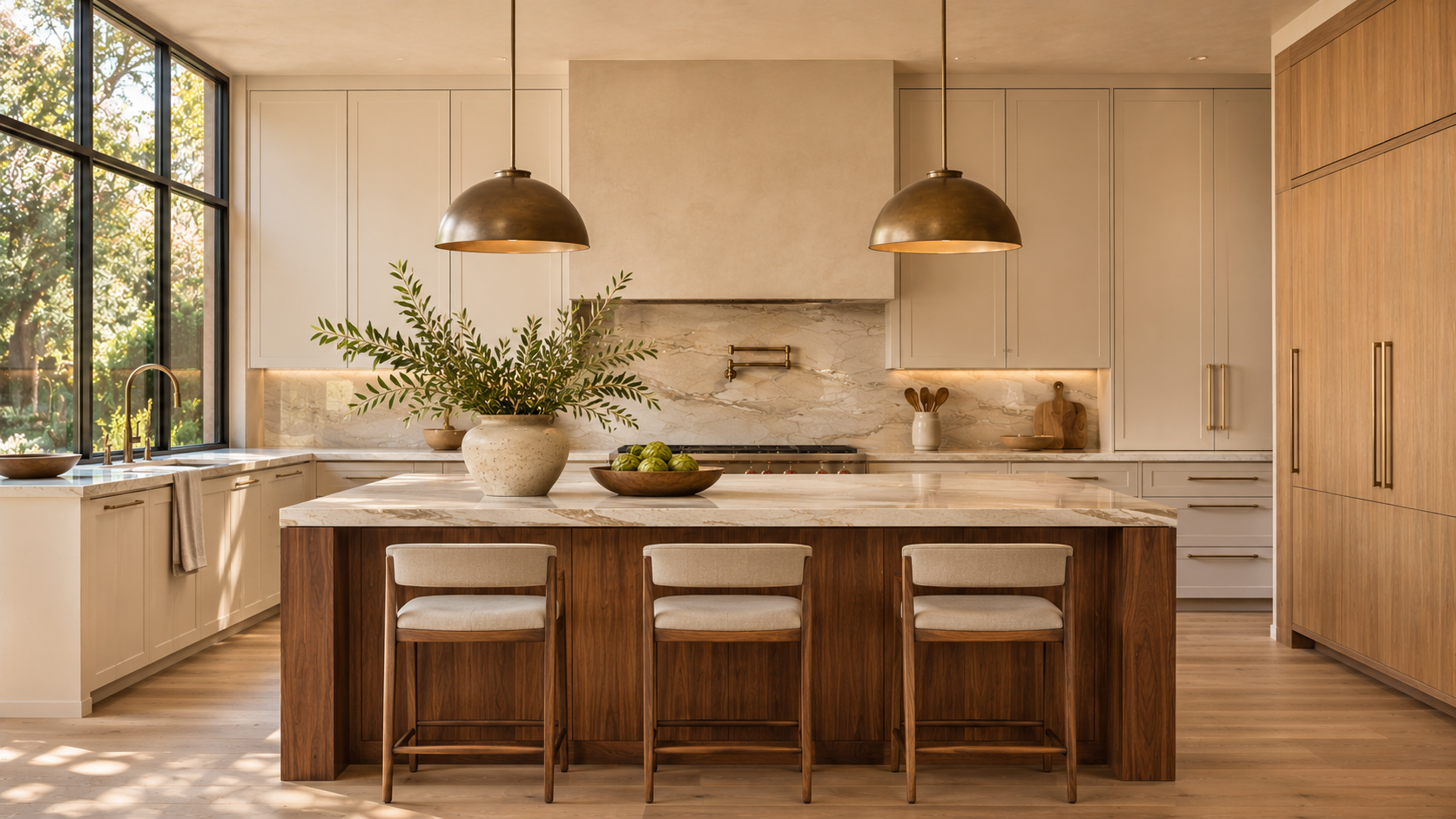
A warm white kitchen with a walnut island and creamy stone may feel layered because each material contributes something different.
The important consideration is how the colors relate to the home's architecture, flooring, natural light, and adjacent rooms.
Rather than selecting finishes because they are fashionable, choose a palette that feels appropriate for the residence.
Consider How Lighting Reveals Materials
Lighting influences how every material in the kitchen is experienced.
Natural daylight can reveal subtle wood grain, stone movement, and the texture of painted finishes.
Thoughtful artificial lighting supports these materials without overwhelming them.
Under-cabinet lighting can illuminate work surfaces, while carefully positioned pendants provide task lighting and contribute to the overall composition.
Integrated lighting within a pantry or display cabinet can also introduce depth when used selectively.
Avoid treating every surface as an opportunity for decorative illumination.
A refined lighting plan should support the architecture and everyday activities rather than compete with the materials.
Make Everyday Function Feel Effortless
A beautiful kitchen becomes more valuable when its organization supports the way people actually live.
Thoughtful cabinetry can reduce countertop clutter, improve access to frequently used items, and make everyday tasks more comfortable.
Deep drawers for cookware, dedicated pantry storage, integrated waste systems, and carefully planned appliance locations can improve the kitchen's functionality without becoming prominent visual features.
A concealed coffee station or appliance garage can also help maintain a cleaner appearance when not in use.
These details should be planned around the household's habits rather than added simply because they are available.
One of the most understated expressions of luxury is a kitchen where everything has a place and daily routines feel intuitive.
Design for Longevity Rather Than Immediate Impact
A kitchen that feels expensive today should also remain relevant years from now.
This does not require avoiding personality or distinctive materials.
Instead, it means making decisions based on architectural compatibility, quality, and long-term usability rather than short-lived trends.
Well-proportioned cabinetry, natural materials, carefully selected finishes, and practical storage can provide a strong foundation.
Decorative elements can change over time, but the cabinetry and architectural layout are more permanent investments.
For this reason, the most important decisions often involve elements that are difficult to replace later, including cabinet construction, door proportions, integrated appliances, and the relationship between cabinetry and surrounding millwork.
What Really Makes a Kitchen Feel Expensive?
An expensive-looking kitchen is not necessarily one with the most elaborate finishes or the largest number of premium features.
It is a space where proportions feel right, materials complement one another, cabinetry details are precise, and functionality has been carefully considered.
Natural wood, quality stone, restrained hardware, and thoughtful lighting can create an interior with lasting character.
The most important element is consistency. Every decision should contribute to the same architectural direction rather than competing for attention.
The most convincing luxury is often the least obvious. It is experienced through quality, balance, and attention to detail rather than decoration alone.
Explore Refined Kitchen Cabinetry With Atelier Design Society
Atelier Design Society works with homeowners, architects, interior designers, builders, and other design professionals selecting premium cabinetry for Bay Area homes. At the Atelier Design Society showroom in Menlo Park, project teams can explore cabinetry construction, natural wood finishes, painted cabinetry, door styles, hardware, and surface materials while developing a kitchen that feels refined, personal, and architecturally cohesive.
