When Should You Specify Grabill Cabinets for a Luxury Project?
Not every luxury project needs fully custom cabinetry.
But some projects reach a point where standard dimensions, predefined finishes, or limited modifications begin to dictate the design.
That is when the cabinetry specification needs to change.
Grabill is a true custom cabinetry manufacturer built around personalization rather than a fixed set of standard solutions. Its current capabilities include frameless and inset construction, custom modifications, custom millwork, custom finishes, and both standard and completely custom door designs.
For designers, that creates an important distinction.
Grabill should not necessarily be specified because the project is expensive.
It should be specified when the design requires a level of control that more standardized cabinetry cannot provide efficiently.
Perhaps the architecture creates unusual dimensions.
Perhaps the cabinetry needs to read more like furniture.
Perhaps the finish needs to be developed specifically for the residence.
Perhaps a hood, island, molding, door, or panel condition does not exist as a standard product.
Or perhaps the cabinetry is one of the defining architectural elements of the home.
Those are the conditions where true custom capability begins to matter.
What Makes Grabill Different From a More Standardized Cabinetry Collection?
Freedom.
With many cabinetry collections, the designer works primarily by selecting from existing products and then modifying them within an established system.
With Grabill, the starting point can be much more open.
Grabill describes its approach as allowing customization of virtually every design aspect, including custom hoods, islands, posts, moldings, door styles, finishes, and restoration matching. The company also states that it can fabricate custom profiles and develop one-of-a-kind colors and finishes.
That changes the design conversation.
Instead of asking only:
What does the catalog offer?
The team can ask:
What does the project need?
When Does That Level of Customization Become Valuable?
When the architecture should drive the cabinetry.
A luxury residence may include:
Unusual wall dimensions.
Very tall ceilings.
Complex transitions.
Large-scale islands.
Special appliance integrations.
Furniture-like built-ins.
Integrated architectural millwork.
Highly specific door proportions.
Custom molding profiles.
Unique material combinations.
In those conditions, forcing the design into predetermined cabinetry modules can begin to create compromises.
True custom cabinetry gives the designer another option.
The cabinetry can respond to the architecture rather than asking the architecture to accommodate the cabinetry.
Should Grabill Be Specified for Every Luxury Kitchen?
No.
Luxury and customization are not the same thing.
A beautifully designed kitchen can use a more standardized premium cabinetry system when its dimensions, finishes, door styles, and functional requirements fit comfortably within that system.
True custom cabinetry becomes valuable when the additional flexibility is actually being used.
If the project requires no meaningful customization, specifying the most flexible cabinetry solution available may not create proportional value.
The cabinetry level should follow the project.
Not the label attached to it.
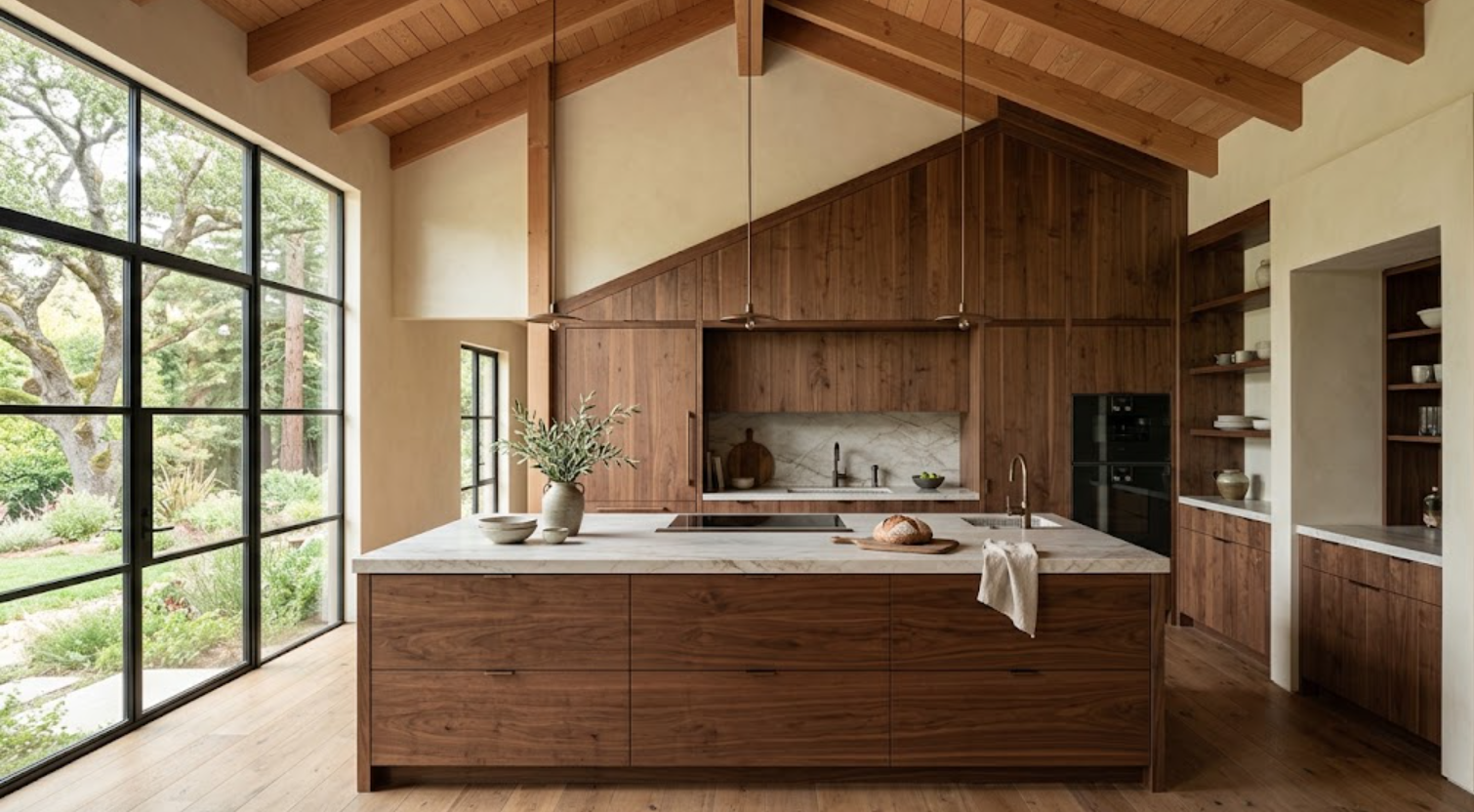
Specify Grabill When Standard Cabinet Widths Start Controlling the Elevation
Cabinet dimensions create rhythm.
That rhythm becomes particularly visible in highly designed kitchens.
Imagine an architectural elevation that should contain four perfectly balanced drawer fronts.
If the available cabinet widths require three awkward modules and a filler, the cabinetry system is beginning to determine the composition.
The same issue can occur around:
Windows.
Ranges.
Refrigeration.
Doorways.
Tall pantry walls.
Open shelving.
Islands.
A true custom approach can give the designer more control over those proportions.
Why Do Custom Dimensions Matter in Minimal Interiors?
Because minimalism exposes mistakes.
A highly detailed kitchen can sometimes absorb small dimensional irregularities.
A restrained slab-front elevation cannot.
The eye notices:
Uneven doors.
Unnecessary fillers.
Inconsistent drawer widths.
Misaligned appliances.
Awkward end panels.
Unbalanced openings.
When the design depends on large, quiet surfaces and precise alignment, custom dimensions can become an architectural tool.
Specify Grabill When Cabinetry Needs to Feel Like Furniture
Some cabinetry should not read as conventional cabinetry at all.
A primary bathroom vanity may need to feel like a freestanding piece.
A bar may need the proportions of fine furniture.
A library may require integrated millwork.
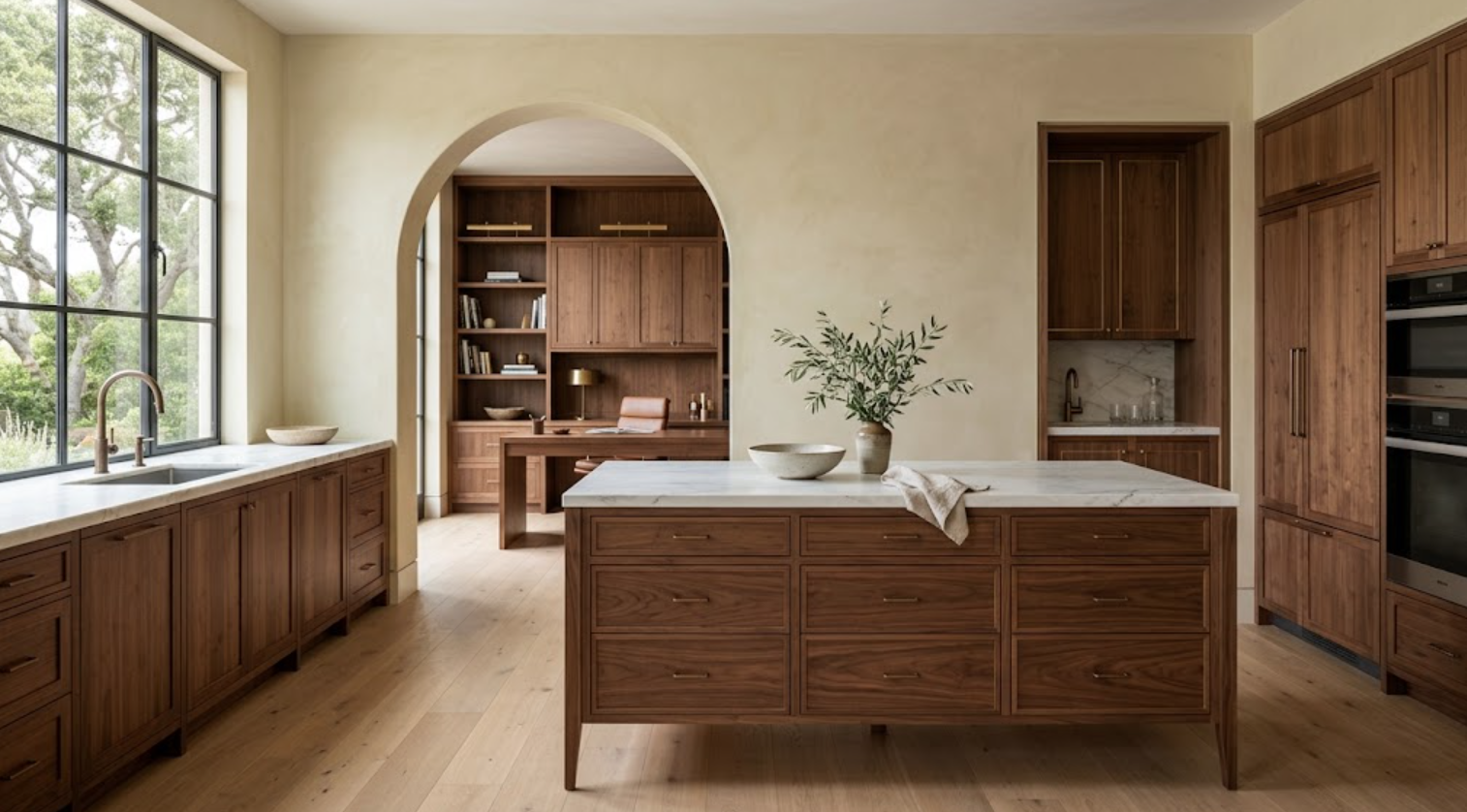
A kitchen island may need a custom base, unusual molding, specialized posts, or another architectural treatment.
Grabill specifically identifies custom islands, hoods, posts, moldings, accent pieces, and profile matching among its custom capabilities.
That makes the collection particularly relevant when cabinetry is being used as architectural furniture.
What Does Furniture-Like Cabinetry Actually Mean?
It does not necessarily mean decorative.
A contemporary cabinet can still feel furniture-like.
The distinction often comes from:
Proportion.
Material.
Base treatment.
Panel thickness.
End conditions.
Door composition.
Hardware.
Interior finish.
How the piece meets the wall.
How much negative space surrounds it.
A floating walnut vanity with precisely proportioned fronts may feel more like furniture than a highly decorated traditional cabinet.
Customization allows those relationships to be developed deliberately.
When Does a Custom Island Make Sense?
When the island is more than a row of base cabinets beneath stone.
Large luxury kitchens often place significant visual importance on the island.
It may contain:
Seating.
Storage.
A sink.
A dishwasher.
Specialized drawers.
Integrated power.
Display.
Open shelving.
Stone end panels.
Furniture-like ends.
Multiple materials.
If the island is the central object in the room, its proportions deserve the same level of attention as any other major architectural element.
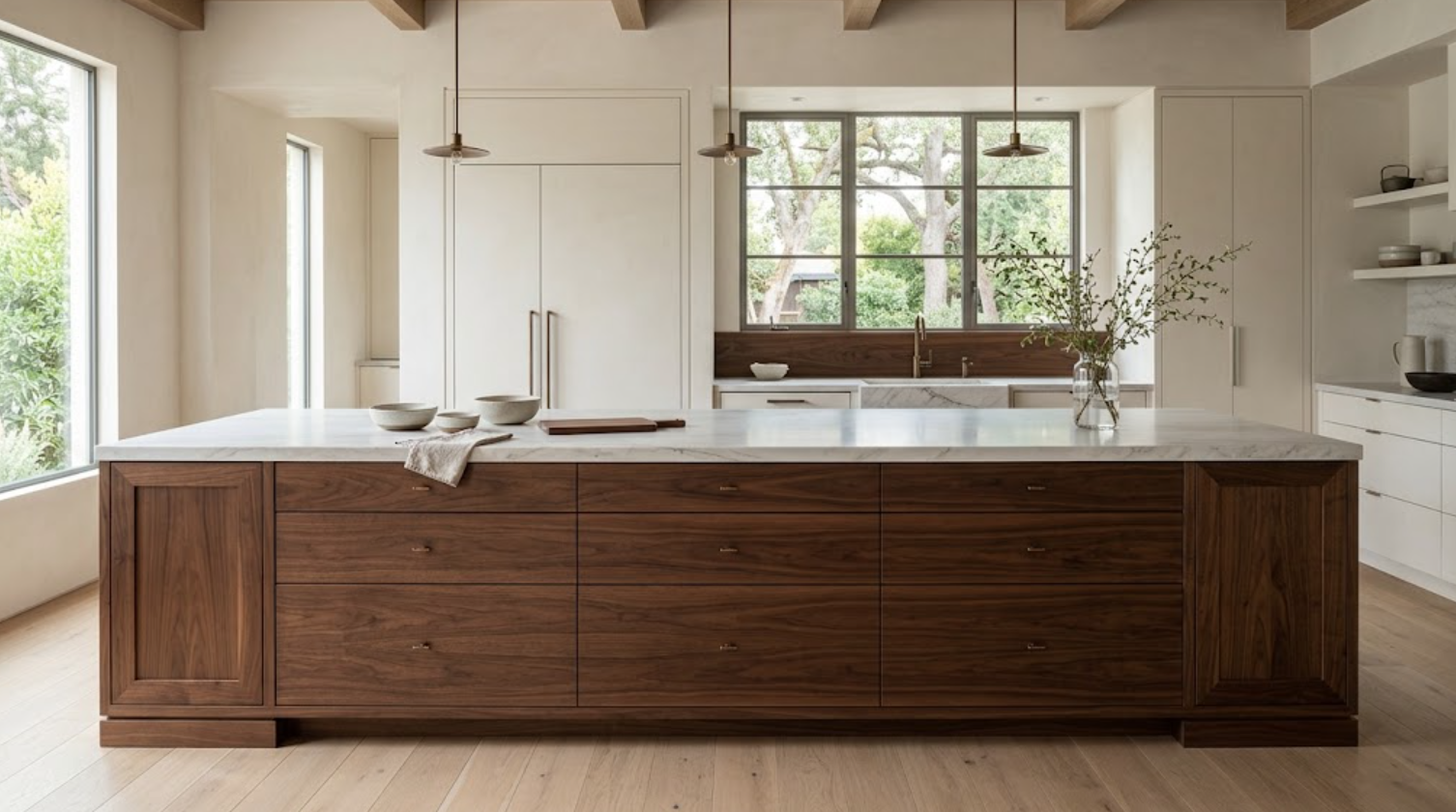
Specify Grabill When the Finish Is Part of the Design Concept
Sometimes the right finish already exists.
Sometimes it does not.
Grabill offers standard finishes, but one of its defining capabilities is custom finish development.
The manufacturer treats even a slight requested deviation from a standard finish as custom and provides formal processes for developing both single-step and multi-step custom finishes. Public paint-company colors, matching existing aged Grabill cabinetry, and other nonstandard finish requests can all fall into the custom process.
For designers, that opens another level of material control.
When Is a Custom Finish Worth Developing?
When the finish needs to perform a specific role in the overall palette.
Perhaps the cabinetry needs to coordinate with:
Existing millwork.
A particular furniture piece.
Historic woodwork.
A wall finish.
A highly specific paint.
An unusual stain direction.
Another architectural material.
Grabill states that it can develop custom colors and match colors, sheens, moldings, and existing conditions.
That can be particularly valuable when a generic “close enough” finish would weaken an otherwise highly controlled interior.
Custom Finish Does Not Mean More Decorative
This distinction matters.
A custom finish might be extremely quiet.
Perhaps the designer needs a white oak stain that removes a particular yellow undertone.
Or a walnut finish that is slightly less red.
Or a painted finish that relates precisely to the plaster palette.
Customization is not synonymous with ornament.
It is simply greater control.
Why Should Custom Finishes Be Developed Early?
Because they require process.
A custom finish may involve:
Reference materials.
Sample development.
Review.
Revision.
Approval.
Grabill’s published process requires physical samples for certain custom finish developments, particularly multi-step finishes.
That means custom finish development should not be treated as a last-minute color selection.
If the finish is important to the design, begin developing it while there is still time to evaluate it properly.
Specify Grabill When You Need a Door That Does Not Exist
Door style is another area where true customization becomes useful.
Perhaps the design calls for:
An unusually narrow frame.
A particular molding.
A custom profile.
A metal inlay.
A unique panel treatment.
A door matching existing millwork.
Grabill’s current door collection already spans slab, framed-panel, applied-molding, metal-inlay, and other contemporary and traditional configurations, with multiple styles available in both frameless and inset construction.
But its capabilities extend beyond those standard doors.
Grabill explicitly positions custom door development as part of its true-custom offering.
When Is a Custom Door Profile Actually Necessary?
When the door is integral to the architectural concept.
Not because the client wants something nobody else has.
That alone is not a design reason.
A custom profile becomes meaningful when it needs to relate to:
Existing millwork.
Wall paneling.
Interior doors.
Historic detailing.
Furniture.
Architectural moldings.
Another repeated element in the home.
In those cases, cabinetry can become part of a larger millwork language.
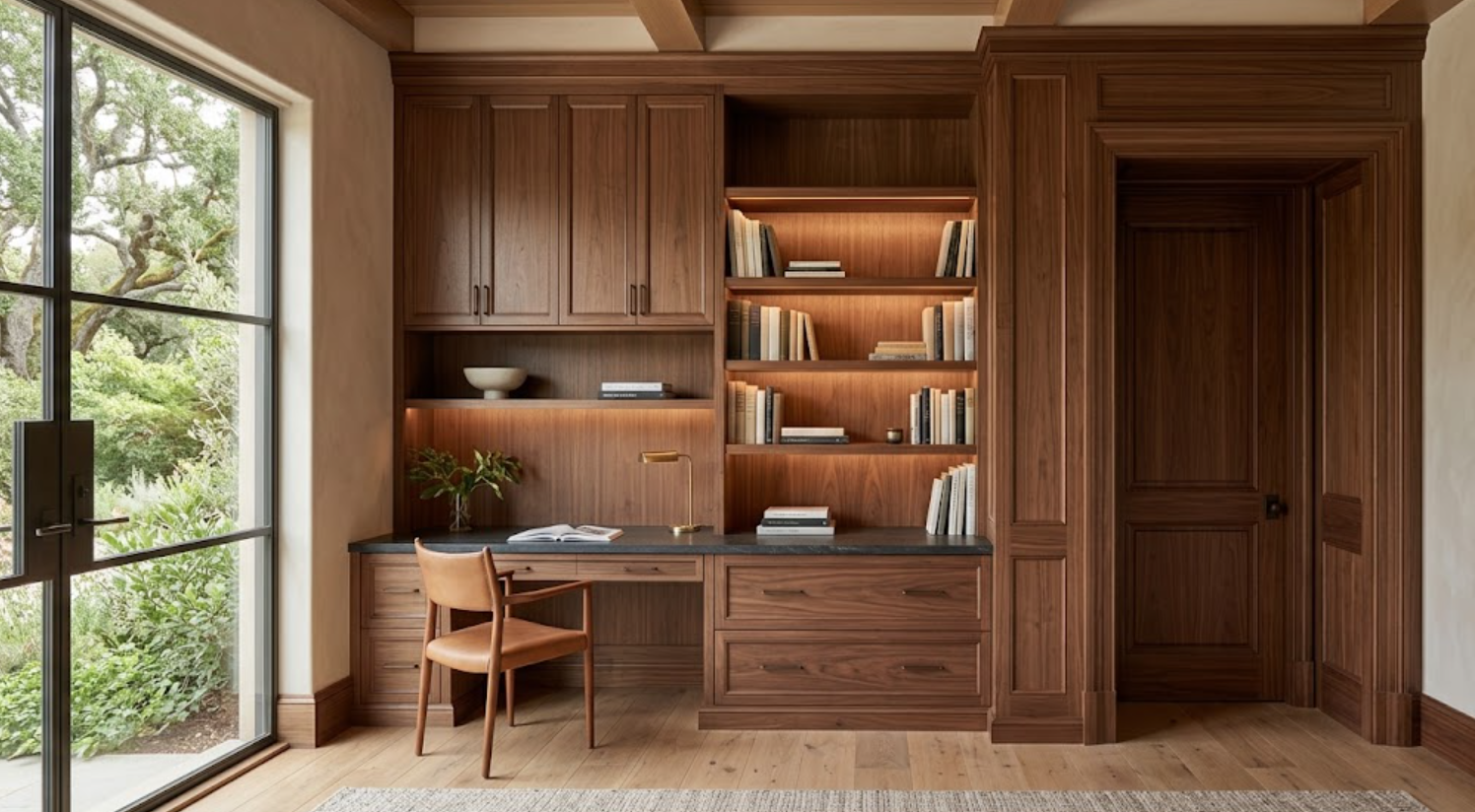
Specify Grabill When the Project Requires Unusual Material Combinations
Luxury cabinetry increasingly combines more than one material:
Wood.
Paint.
Metal.
Glass.
Specialty veneers.
Textured surfaces.
The challenge is not simply adding those materials.
It is integrating them cleanly.
Grabill’s current door offering includes examples such as walnut slab doors with brushed-brass inlays, painted slab doors with chrome inlays, rift-cut white oak, specialty surfaces, and custom-finish applications.
That breadth can be useful when material transitions are part of the cabinetry design rather than decorative additions applied afterward.
What About Metal Inlays?
Metal can create a very precise accent.
Grabill currently shows several doors incorporating metal inlays, including slab and Shaker-style configurations.
Used carefully, that detail can connect cabinetry to:
Hardware.
Lighting.
Plumbing fixtures.
Architectural metalwork.
The important word is carefully.
If metal appears on every cabinet front, it can become the dominant motif.
A limited application can be more architectural.
Specify Grabill When You Need Inset Cabinetry With Greater Freedom
Grabill currently builds both inset and frameless cabinetry.
Inset cabinetry can be particularly useful when a project needs:
Furniture-like construction.
Visible frame rhythm.
Traditional millwork references.
Contemporary slab inset fronts.
Highly controlled reveals.
Grabill’s current door catalog shows numerous door styles available in both frameless and inset configurations, including slab and frame-and-panel options.
That allows inset to move beyond a purely traditional vocabulary.
Can Grabill Work for Contemporary Architecture?
Yes.
True custom cabinetry is not inherently traditional.
Grabill’s current portfolio includes slab doors, metal-inlay fronts, frameless construction, walnut cabinetry, rift-cut white oak, specialty surfaces, and projects combining frameless and inset construction within the same design.
For a contemporary project, the customization may be used to make the cabinetry quieter:
Fewer lines.
Broader fronts.
Cleaner material transitions.
More precise alignment.
That can require just as much custom capability as decorative millwork.
When Does Frameless Custom Cabinetry Make Sense?
When the project needs contemporary construction but cannot be resolved comfortably through standardized frameless modules.
Perhaps the elevation needs unusual widths.
Perhaps several large appliance panels need to align with surrounding fronts.
Perhaps interior storage requires highly specific dimensions.
Perhaps the architecture creates unusual terminations.
Grabill’s frameless capabilities allow the designer to combine the visual clarity of frameless construction with true-custom dimensional flexibility.
What About Mixing Frameless and Inset Cabinetry?
It can work within the same project.
Grabill itself currently features projects that combine both construction types.
That can create hierarchy.
For example:
Frameless cabinetry in a quiet contemporary kitchen wall.
Inset cabinetry on a furniture-like island.
Frameless cabinetry in a secondary utility area.
Inset cabinetry in a library or bar.
The constructions do not need to match if the material story and architecture explain the difference.
Specify Grabill When Appliance Integration Is Architecturally Important
Panel-ready appliances are common in luxury kitchens.
But there is a difference between simply adding an appliance panel and making the appliance disappear convincingly into the elevation.
The design may require:
Custom panel dimensions.
Specific front divisions.
Unusual handle relationships.
Precise adjacent reveals.
Large panels.
Specialized ventilation conditions.
Grabill’s project portfolio includes custom appliance-panel solutions designed to create specific visual alignments rather than simply applying standard cabinet fronts to appliances.
That kind of flexibility becomes valuable when appliance integration is central to the composition.
Why Do Large Appliance Walls Benefit From Custom Thinking?
Because they occupy so much visual space.
A refrigerator and freezer wall may contain several feet of tall cabinetry.
If the appliance panels create awkward divisions, the entire elevation can feel fragmented.
The designer may want the appliance fronts to align with:
Pantry doors.
Adjacent tall cabinetry.
Horizontal rails.
Other panel divisions.
True custom cabinetry can provide more freedom to coordinate those relationships.
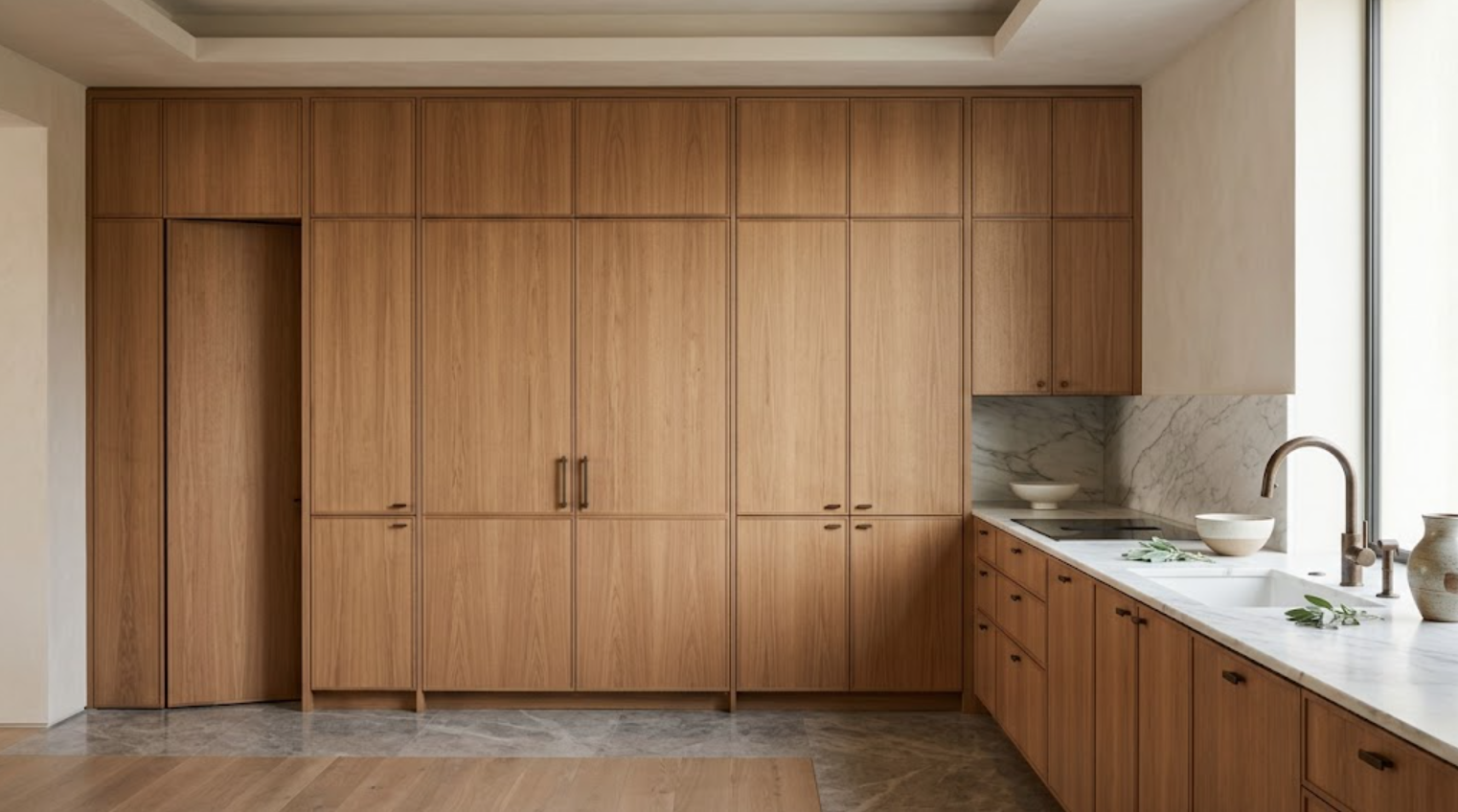
Specify Grabill When Interior Cabinetry Deserves the Same Attention as the Exterior
Luxury cabinetry is experienced with the doors open too.
Consider:
Interior material.
Drawer boxes.
Shelves.
Hardware.
Storage.
Lighting.
Those details affect daily use.
Grabill emphasizes construction integrity and traditional joinery techniques, including reinforced wooden dowels and hand-glued joints, while its current offerings include multiple interior and drawer possibilities depending on the cabinetry specification.
For designers, the interior should be specified with the same intentionality as the exterior.
When Are Custom Interiors Worth It?
When the client has a specific routine or collection that standard accessories cannot serve well.
Examples might include:
Special cookware.
Large serving pieces.
A particular coffee setup.
Specialized bar storage.
Extensive wardrobe storage.
Home-office equipment.
Media components.
Collections.
Custom interior design should solve real functional requirements.
Otherwise, adjustable storage may be more useful over time.
Specify Grabill When One Cabinetry Detail Needs to Be Repeated Throughout the Residence
Custom capability becomes particularly powerful when it creates a language that can recur.
Perhaps the project develops:
A custom door profile.
A specific walnut finish.
A metal inlay.
A distinctive molding.
A particular reveal.
A furniture-like base condition.
That detail can reappear selectively in:
The kitchen.
Primary bathroom.
Bar.
Office.
Library.
Wardrobe.
It does not need to appear everywhere.
A few controlled repetitions can create whole-home continuity.
Does That Mean Grabill Should Be Used in Every Cabinetry Room?
Not necessarily.
A whole-home cabinetry strategy can still use more than one cabinetry collection.
The most highly visible or architecturally complex rooms may justify true custom cabinetry.
Secondary areas may be served effectively by another premium line.
For example, Grabill might be specified for:
The main kitchen.
A feature bar.
The primary bathroom.
A library.
While another cabinetry collection handles:
Laundry.
Secondary bathrooms.
Mudroom.
Other utility spaces.
The cabinetry partner can help establish where customization creates meaningful value.
How Should Designers Think About Budget?
As allocation.
True custom work involves additional design development, tooling, finish development, craftsmanship, and fabrication time. Grabill itself identifies those factors as contributors to the cost of custom and luxury cabinetry.
The useful question is therefore not simply:
Is Grabill expensive?
It is:
Where will Grabill’s customization materially improve this project?
If a custom finish, unusual elevation, furniture-like island, or specialized millwork is central to the design, that investment may be highly visible.
If the room requires none of those things, the same budget may create more value elsewhere.
Specify Grabill Early Enough to Use the Custom Capability
True custom cabinetry should not be introduced after every architectural condition is already fixed.
The cabinetry may affect:
Wall dimensions.
Windows.
Doors.
Appliances.
Plumbing.
Electrical.
Lighting.
Ceiling conditions.
Stone.
Architectural millwork.
Atelier’s own guidance recommends involving the cabinetry partner while meaningful adjustments to those surrounding conditions can still be made.
That becomes even more important when the cabinetry itself is highly customized.
Why Do Drawings Matter More With True Custom Cabinetry?
Because more decisions are being made specifically for the project.
The drawings may need to communicate:
Custom dimensions.
Door proportions.
Special panels.
Moldings.
Appliance integration.
Interior configurations.
Material transitions.
Specialty details.
Finish requirements.
The flexibility of true custom cabinetry is valuable only when the design intent is documented clearly enough to fabricate it.
What Happens After the Design Is Submitted?
Grabill states that once a dealer submits a completed order, its team reviews the information, assigns a promised ship week, and moves the project into drafting. Final drawings, pricing, and details are then submitted to the dealer for approval before the project moves into production.
That approval stage matters.
Customization should not reduce documentation.
It makes careful documentation more important.
How Do You Know When Grabill Is the Right Specification?
Look for the places where the project is asking the cabinetry to do something unusual:
Does the architecture require nonstandard dimensions?
Does the cabinetry need to integrate with architectural millwork?
Is a custom finish essential to the material story?
Does the project require a unique door or molding profile?
Is the island being designed as furniture?
Do appliance panels need unusual proportions?
Does a historic renovation require matching existing cabinetry or trim?
Are standard cabinetry solutions beginning to compromise the elevation?
If several of those answers are yes, true custom cabinetry deserves serious consideration.
When Should You Specify Grabill Cabinets for a Luxury Project?
Specify Grabill when customization is doing meaningful work.
Not simply because the home is large.
Not simply because the project is expensive.
And not simply because custom cabinetry sounds more luxurious.
Specify it when the design requires control:
Control over dimensions.
Proportions.
Door profiles.
Construction.
Materials.
Finishes.
Millwork.
Appliance integration.
Architectural relationships.
Grabill has been producing cabinetry since 1946 and currently positions itself as a true custom manufacturer capable of frameless and inset construction, custom millwork, custom modifications, specialized finishes, and project-specific design development.
That capability is most valuable when the designer has a clear reason to use it.
The goal is not customization for its own sake.
The goal is removing unnecessary limitations between the design on the page and the cabinetry that ultimately gets built.
Explore Grabill Cabinets With Atelier Design Society
Atelier Design Society works with interior designers, architects, builders, homeowners, and other design professionals evaluating premium and custom cabinetry for sophisticated residential projects throughout the Bay Area.
For a project considering Grabill, the cabinetry conversation can begin with the architecture rather than a predetermined cabinet configuration.
Bring architectural drawings, preliminary elevations, appliance specifications, material references, existing millwork details, finish inspiration, and any cabinetry conditions that are proving difficult to resolve through standard solutions.
The objective is to determine where true custom capability adds meaningful value and how that capability can support the larger residential design.