Why Seeing Cabinet Finishes in Person Matters
Cabinet finishes are difficult to judge accurately from a screen. A white oak sample that looks warm online may appear cooler beside your flooring. A painted finish can shift considerably under natural light. Walnut may show more variation and depth than a photograph suggests.
For a kitchen remodel, custom home, or whole-home cabinetry project, seeing finishes in person gives you information that digital images cannot. It allows you to evaluate color, grain, texture, sheen, and how the cabinetry works with the other materials in your home.
Screens Cannot Show the Full Material
Digital inspiration is useful for establishing direction, but screens introduce variables. Display settings, photography, editing, and surrounding colors can all affect how a finish appears.
Natural wood creates another challenge because variation is part of the material. White oak, walnut, and other wood species can change from board to board. Grain direction, cut, stain, and finish can influence the final appearance.
Physical samples give you a more realistic understanding of what you are specifying.
Natural Wood Needs to Be Experienced Up Close
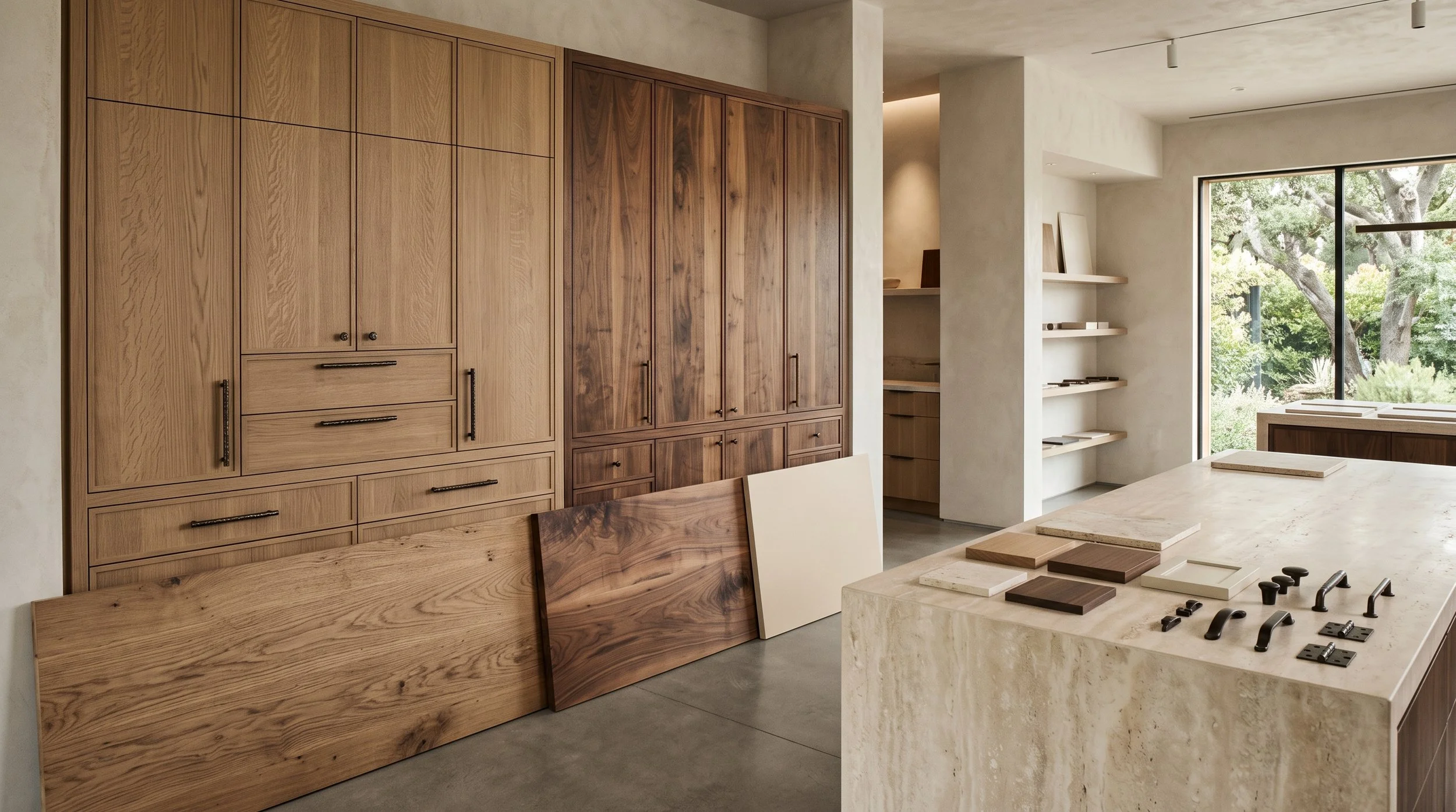
Wood cabinetry is not a flat color. Grain, texture, natural variation, and the way a finish interacts with the wood all contribute to its appearance.
Rift-cut white oak can create a more linear grain pattern, while walnut often brings greater tonal movement and contrast. Stain can alter the warmth of either material, and sheen affects how much light reflects from the surface.
Looking at a larger sample also helps. A small piece may not reveal enough grain variation to understand how an entire wall of cabinetry could feel.
Lighting Can Change a Cabinet Finish
A finish should be considered under more than one lighting condition.
Natural daylight can reveal undertones that are difficult to see under artificial showroom lighting. The direction and intensity of daylight also change throughout the day, particularly in rooms with large windows.
Interior lighting matters too. Warm LEDs can shift the appearance of painted cabinetry and natural wood differently than cooler light sources.
You cannot perfectly reproduce the lighting conditions of your future kitchen during a showroom visit, but seeing physical finishes under different light provides much more information than selecting from a photograph.
Undertones Matter When Materials Come Together
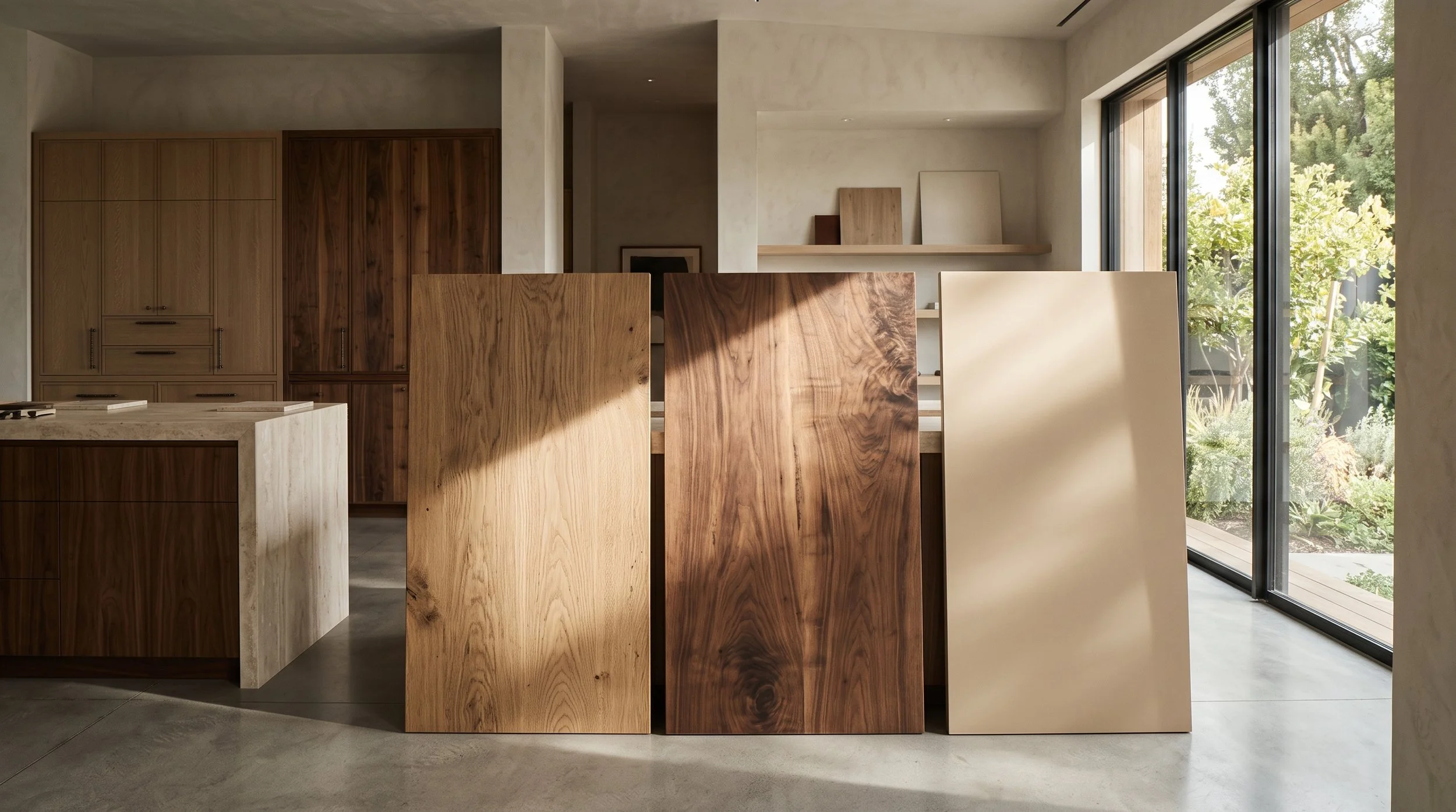
A cabinetry finish rarely exists by itself. It sits beside flooring, countertops, backsplash materials, hardware, wall finishes, and furnishings.
This is where undertones become important.
Two materials may both appear “warm” online but look unrelated when placed together. An existing oak floor may lean more golden than a new white oak cabinet finish. A creamy stone can make a painted cabinet color appear cooler. Walnut may introduce enough depth that the surrounding materials need to become quieter.
Seeing materials together allows these relationships to be evaluated before they are installed permanently.
Compare Cabinetry and Stone at the Same Time
Stone can have an especially strong influence on cabinetry.
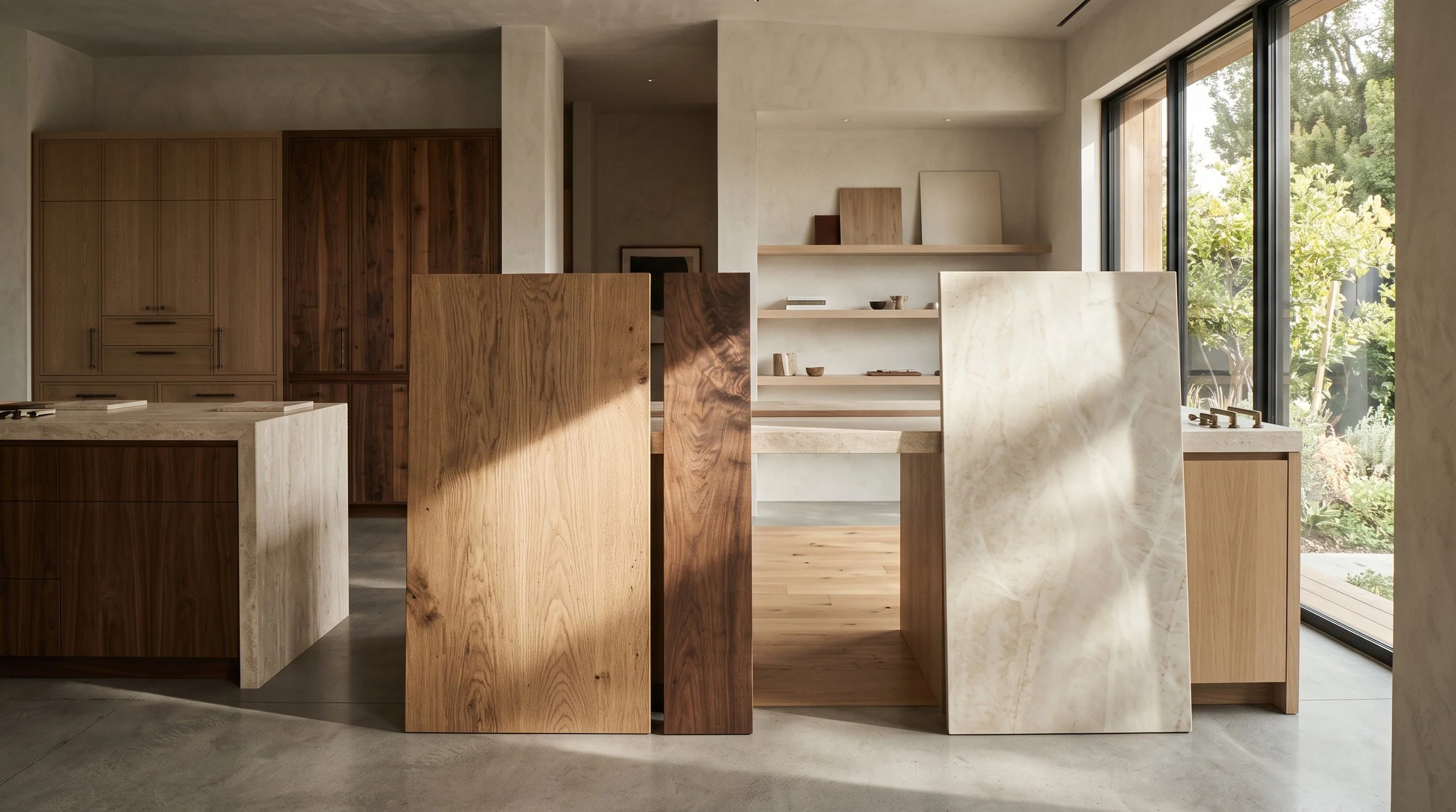
Natural stone introduces movement, veining, mineral variation, and color that may not be obvious from a small photograph. When possible, cabinetry samples should be evaluated alongside the actual stone being considered, ideally with a larger stone sample or full slab when available.
If the stone is visually expressive, the cabinetry may need to become more restrained. If the cabinetry has significant natural grain, a quieter surface may create better balance.
Neither material should be selected without considering the other.
Larger Samples Reveal More Than Small Swatches
Scale matters when evaluating cabinetry.
A small painted chip can help identify color, but it does not show how that finish will feel across a bank of tall cabinetry. A small wood sample may capture one grain pattern while missing the natural variation that becomes visible across several doors.
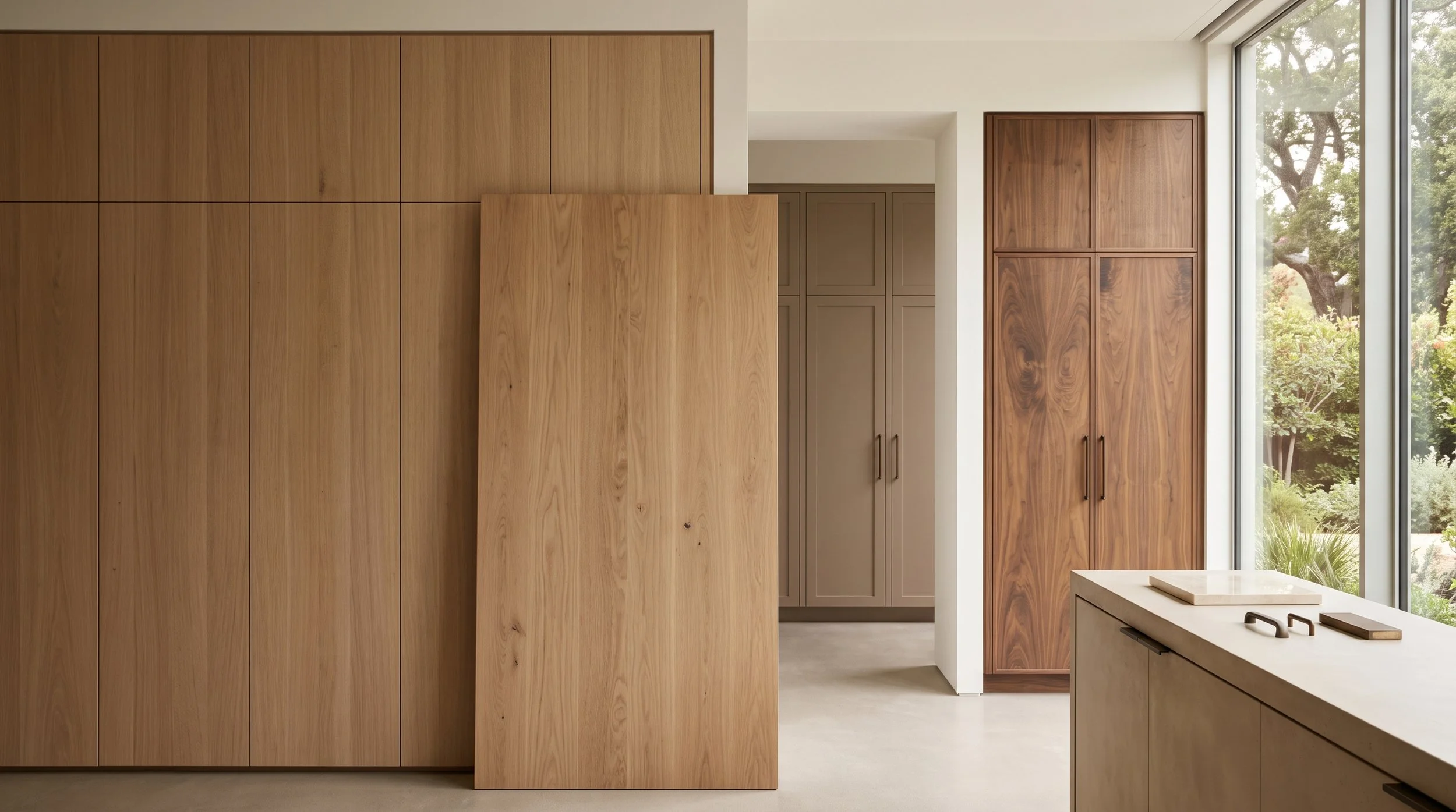
Full-scale cabinetry displays provide another level of information. They show how a finish behaves across doors, drawers, panels, interiors, and architectural details.
They also allow you to evaluate whether a material feels visually quiet or dominant when used across a larger surface.
Physical Finishes Make Customization Easier to Understand
Seeing cabinetry in person can also clarify how much customization a project actually needs.
You may discover that an existing finish works beautifully once seen at full scale. In another project, the surrounding flooring, stone, or architecture may require a more specific stain, paint color, wood selection, or level of customization.
The decision becomes less about choosing the finish that looked best online and more about selecting the finish that works within the actual material story of the home.
That distinction is particularly important for whole-home cabinetry, where several finishes may need to relate without being identical.
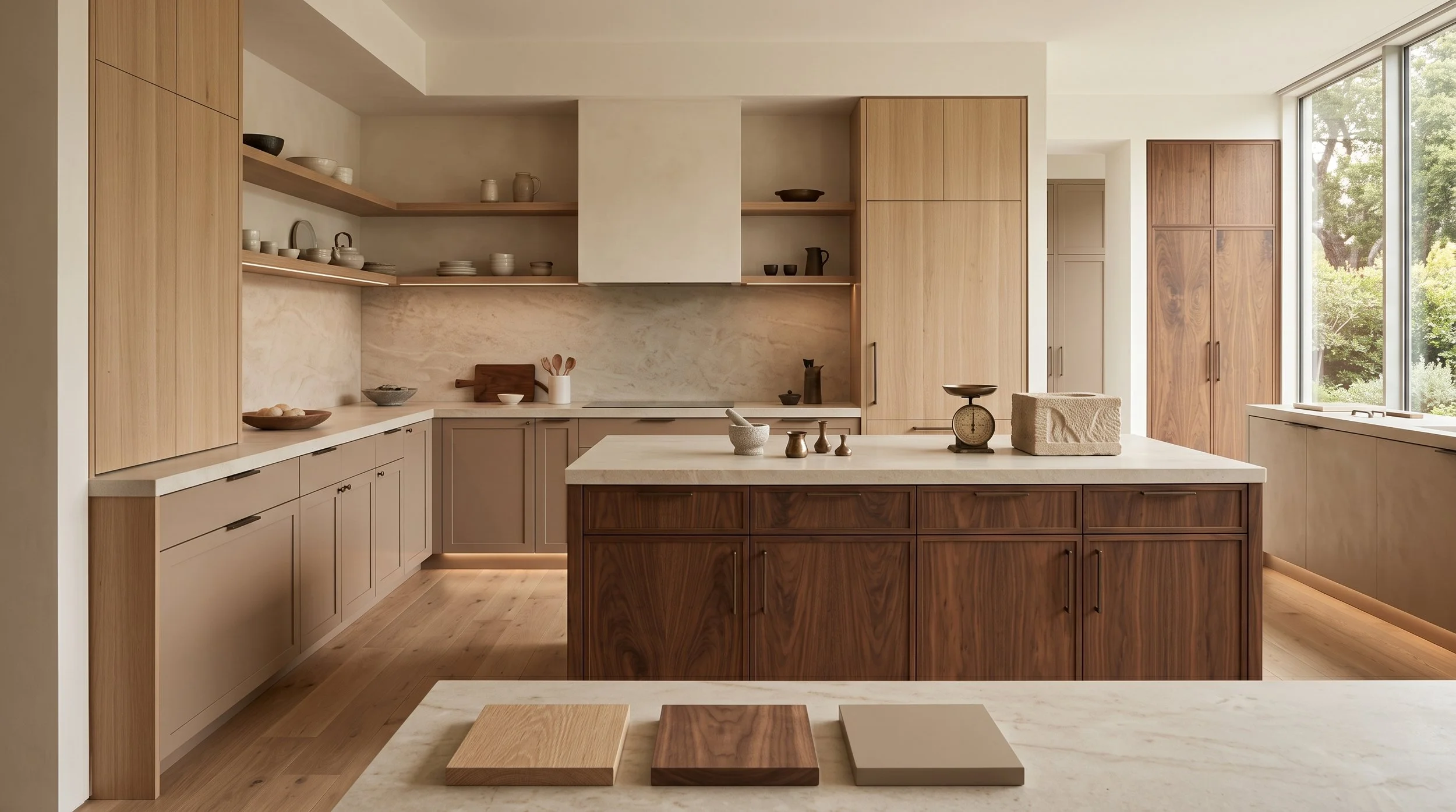
Should You Choose Cabinet Finishes Online?
Online research is an effective place to begin. It can help identify wood species, painted finishes, cabinetry styles, and general design directions worth exploring.
The final evaluation should happen with physical materials whenever possible.
Bring samples of existing flooring, stone, paint, or other materials that will remain in the home. Compare them with cabinetry finishes under different light. Look at larger samples and full-scale displays. Pay attention to grain, texture, sheen, and undertones rather than color alone.
Those comparisons can prevent a finish from being selected in isolation and help the entire material palette feel intentional once installed.
See Cabinet Finishes in Person at Atelier Design Society
Atelier Design Society works with homeowners, architects, interior designers, builders, and other design professionals selecting premium cabinetry for Bay Area homes. At the Atelier Design Society showroom in Menlo Park, project teams can compare natural woods, painted finishes, cabinetry construction, hardware, interiors, surfaces, and full-scale installations while developing a coordinated material palette.
Seeing the materials together can make decisions that feel uncertain on a screen considerably clearer in person.